+91 95752 60218

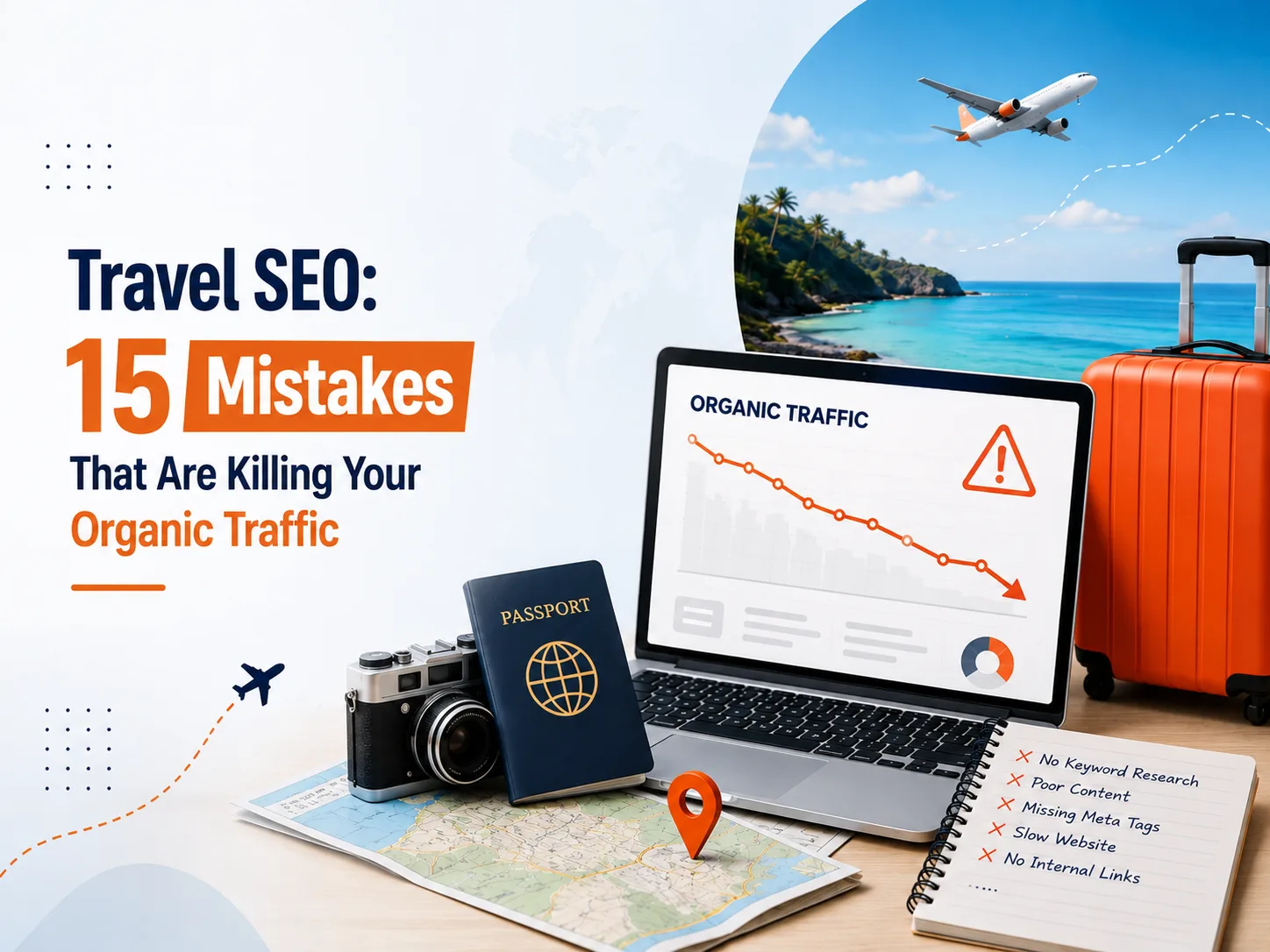
The travel industry is one of the most competitive sectors in search engine optimization. Every day, thousands of travel blogs, tour operators, travel agencies, hotel websites, and destination guides compete for the same audience. While many businesses invest time in publishing new content, they often overlook critical SEO issues that quietly reduce organic visibility. As search engines continue to prioritize user experience, content quality, and technical performance, even minor optimization mistakes can significantly impact rankings and website traffic.
Travel SEO is no longer about adding destination keywords repeatedly or publishing hundreds of city pages. Success depends on understanding search intent, creating valuable content, maintaining a technically healthy website, and continuously improving user experience. Businesses that avoid common seo mistakes are more likely to attract qualified visitors, increase engagement, and generate bookings through organic search.
This guide explains the 15 most common Travel SEO mistakes that reduce organic traffic and how they can be corrected for long-term growth. Businesses looking for sustainable SEO strategies often rely on Digital OmniTech to improve search visibility through ethical optimization techniques and data-driven content planning.
Why Travel SEO Requires a Different Approach
Travel-related searches cover every stage of the customer journey. Some users search for inspiration, while others compare destinations, check prices, or look for immediate booking options. Search engines evaluate whether a webpage satisfies these different intentions.
An effective Travel SEO strategy combines high-quality destination content, fast-loading pages, mobile-friendly design, internal linking, local optimization, structured data, and continuous performance monitoring. Ignoring any of these factors can gradually reduce rankings and limit organic growth.
1. Targeting Extremely Broad Keywords
Many travel websites attempt to rank for highly competitive terms such as “best hotels,” “Europe vacations,” or “travel packages.” These keywords are dominated by established travel platforms with massive authority. Instead of chasing impossible keywords, websites should target long-tail search phrases that match specific destinations, traveler interests, budgets, or seasonal searches. Long-tail keywords attract visitors with stronger purchase intent and generally offer better conversion opportunities.
2. Ignoring Search Intent
One of the biggest SEO mistakes is creating content that does not match what users expect. A traveler searching for “things to do in Goa in monsoon” wants practical recommendations, while someone searching for “book Goa honeymoon package” is looking for purchasing options.
Publishing inspirational articles when users expect booking information or creating commercial pages when users want travel advice results in poor engagement and lower rankings. Understanding informational, navigational, commercial, and transactional intent is essential for Travel SEO success.
3. Publishing Thin Destination Pages
Many travel websites create hundreds of destination pages using nearly identical content. Simply changing city names while keeping the remaining text unchanged creates low-value pages that search engines rarely reward. Each destination should include unique information, local attractions, transportation details, accommodation suggestions, weather information, travel tips, seasonal recommendations, and frequently asked questions. Original content provides genuine value while improving search performance.
4. Publishing Unedited AI Content
Artificial intelligence can accelerate content production, but publishing AI-generated travel guides without editing often produces generic information lacking real insights. Google increasingly rewards content demonstrating expertise, experience, accuracy, and usefulness. Every AI-assisted article should be fact-checked, expanded with destination-specific knowledge, updated regularly, and written naturally before publication.
5. Overusing Keywords
Keyword stuffing remains a common issue across travel websites. Repeating location names unnaturally throughout headings and paragraphs reduces readability while signaling low-quality optimization. Search engines now evaluate semantic relevance rather than simple keyword frequency. Primary keywords, secondary keywords, and related travel terms should appear naturally within valuable content.
6. Ignoring Technical SEO
Even exceptional content cannot perform well if search engines struggle to crawl the website.Common technical issues include blocked robots.txt files, incorrect canonical tags, broken XML sitemaps, crawl errors, duplicate URLs, indexing problems, and broken redirects. Regular technical audits help identify these issues before they affect rankings. A technically healthy website allows search engines to understand content more efficiently.
7. Poor Mobile Experience
Most travelers now research destinations, compare prices, and book trips using smartphones. Websites that perform poorly on mobile devices lose both visitors and rankings. Responsive layouts, readable fonts, properly sized buttons, optimized images, and simple navigation improve usability while supporting better search visibility. Digital OmniTech recommends prioritizing mobile usability because it directly influences both user satisfaction and search engine performance.
8. Slow Website Speed
Travel websites typically contain numerous high-resolution destination photographs, videos, maps, and interactive elements. Without optimization, these assets significantly increase loading time. Compressing images, implementing lazy loading, reducing unnecessary scripts, enabling browser caching, and improving server response time contribute to faster page performance. Page speed has become an important ranking factor while also reducing bounce rates.
9. Weak Meta Titles and Meta Descriptions
Search results represent the first impression users have of a travel website. Generic titles and uninspiring meta descriptions reduce click-through rates even when pages rank well. Well-written metadata should clearly describe page content, include relevant keywords naturally, and encourage users to visit the page. Higher click-through rates often contribute to improved organic performance.
10. Missing Internal Linking
Many travel websites publish destination guides without connecting them to related pages. Internal links distribute authority throughout the website while helping users discover relevant destinations, travel itineraries, transportation guides, accommodation pages, and seasonal recommendations. A strong internal linking strategy also improves crawl efficiency for search engines.
11. Lack of Trust Signals
Travelers expect reliable information before making booking decisions. Missing author profiles, outdated content, unclear contact details, absent customer reviews, and unsecured browsing experiences reduce credibility. Websites demonstrating expertise, transparent business information, updated travel advice, and secure browsing create stronger trust with both users and search engines.
12. Poor Link Building Strategy
Backlinks continue to play a significant role in Travel SEO. However, purchasing low-quality backlinks or participating in spammy link schemes often causes long-term damage. Sustainable authority develops through valuable destination resources, travel research, original guides, digital PR, partnerships, and naturally earned references from reputable travel-related websites. Quality consistently outperforms quantity.
13. Ignoring Local SEO
Travel agencies, hotels, resorts, tour operators, and local attractions depend heavily on regional visibility. Optimizing location pages, maintaining accurate business information, collecting authentic customer reviews, targeting local search phrases, and creating location-focused content improve visibility for users searching nearby services. local seo is particularly valuable for businesses serving specific destinations.
14. Missing Structured Data
Structured data helps search engines understand webpage content more accurately. Travel websites can benefit from schema markup for destinations, reviews, FAQs, events, hotels, organizations, breadcrumbs, and articles. Proper implementation increases the possibility of rich search results, improving visibility and click-through rates. Schema also enhances how travel information appears across search engines.
15. Tracking Rankings Instead of Business Results
Many website owners celebrate ranking improvements while ignoring actual business performance. Keyword positions alone do not measure SEO success. Important performance indicators include organic traffic growth, qualified visitors, booking inquiries, conversion rates, revenue generated through search, engagement metrics, and returning visitors.
Monitoring meaningful business metrics provides a clearer picture of SEO effectiveness. Businesses working with Digital OmniTech often focus on measurable growth rather than rankings alone, creating strategies that align SEO performance with overall business objectives.
Building a Sustainable Travel SEO Strategy
Travel SEO continues evolving alongside changing search behavior and search engine algorithms. Businesses that prioritize helpful content, technical excellence, mobile optimization, user experience, and trustworthy information are more likely to achieve consistent organic growth.
Instead of relying on shortcuts, sustainable optimization focuses on creating valuable travel resources that genuinely help users make informed decisions. Regular website audits, content updates, performance monitoring, and continuous optimization ensure long-term visibility in an increasingly competitive market.
Whether managing a travel blog, destination portal, tour company, or hotel website, avoiding these fifteen common mistakes provides a strong foundation for higher rankings, increased organic traffic, and better business results. With a structured SEO strategy and continuous improvement, Digital OmniTech helps businesses strengthen their online presence while building sustainable organic growth in the competitive travel industry.
FAQs
1. What is Travel SEO?
Travel SEO is the process of optimizing travel-related websites to improve their visibility in search engines through quality content, technical optimization, keyword research, local SEO, and better user experience.
2. Why is organic traffic important for travel websites?
Organic traffic brings highly targeted visitors who are actively searching for destinations, travel guides, hotels, or tour packages, making it one of the most cost-effective sources of long-term website growth.
3. How often should travel content be updated?
Popular destination guides should be reviewed and updated regularly to ensure pricing, attractions, travel regulations, seasonal information, and recommendations remain accurate and relevant.
4. Does page speed affect Travel SEO?
Yes. Faster-loading websites improve user experience, reduce bounce rates, and support better search engine rankings, especially on mobile devices.
5. Which keywords should travel websites target?
Travel websites should focus on a balanced mix of primary keywords, long-tail keywords, destination-specific terms, local search phrases, and informational search queries that match user intent.