+91 95752 60218

Introduction
Artificial intelligence is transforming how people search for legal information. Instead of typing short keywords into search engines, users increasingly rely on AI-powered platforms that provide direct, conversational answers. Whether someone is searching for guidance on business law, family disputes, intellectual property, or corporate compliance, AI-generated search experiences are becoming a primary source of information before users visit a website.
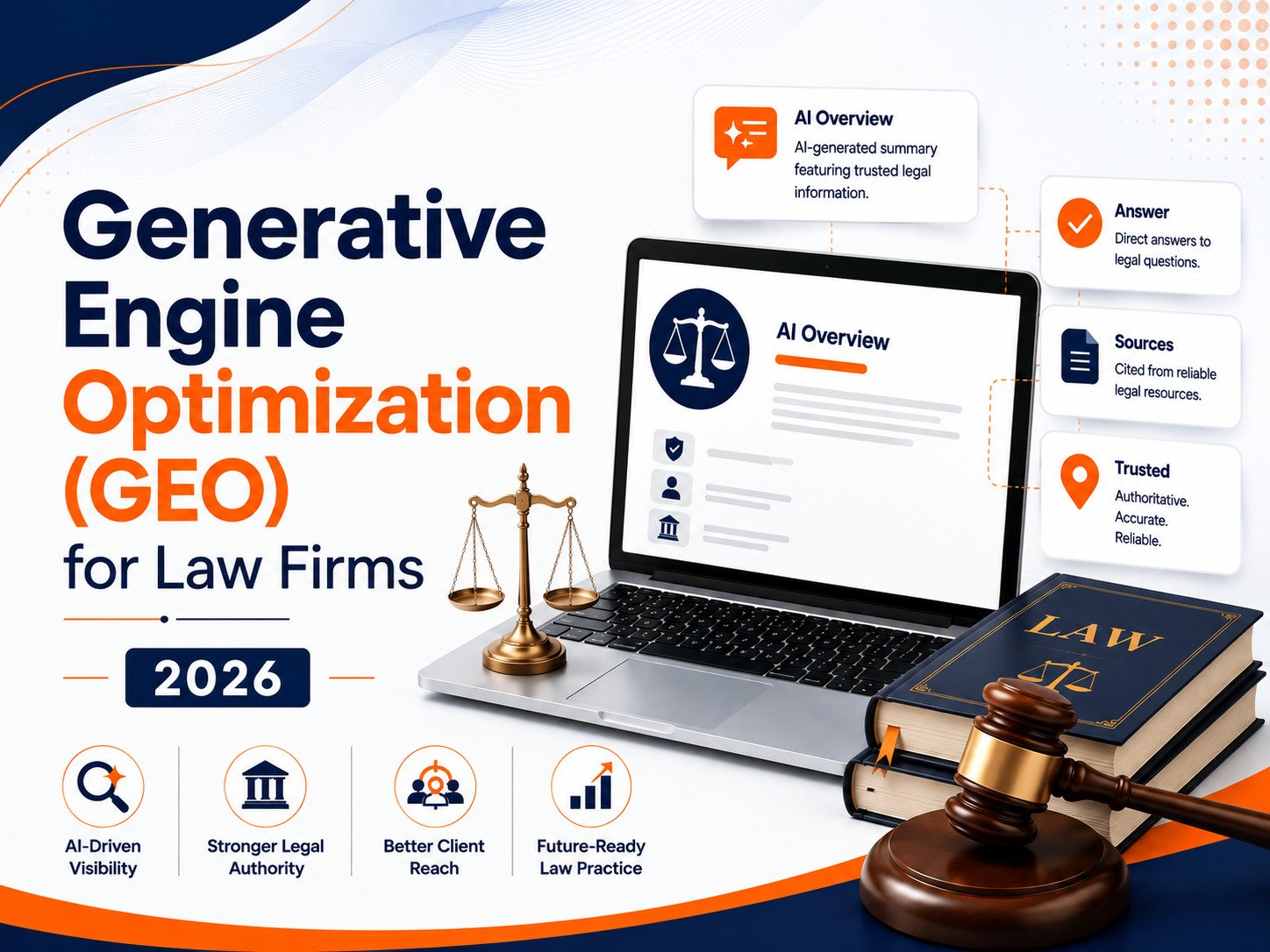
This shift has introduced a new approach called Generative Engine Optimization (GEO) for Law Firms 2026. Unlike traditional SEO, which focuses mainly on improving rankings on search engine result pages, GEO helps legal websites become reliable sources that AI systems can understand, interpret, and reference while generating responses. The objective is not simply to rank higher but to ensure legal content is presented in a structured, trustworthy, and context-rich format that aligns with the way modern AI search engines process information.
Law firms that continue relying only on traditional optimization strategies may gradually lose visibility as AI-generated search becomes more prominent. Firms that embrace GEO early can strengthen their online authority, improve digital credibility, and increase opportunities to reach potential clients through emerging AI search experiences.
Digital OmniTech helps businesses prepare for this changing digital environment by combining modern optimization techniques with proven SEO practices that improve visibility across both conventional search engines and AI-driven platforms.
What Is Generative Engine Optimization (GEO)?
Generative Engine Optimization is the process of creating and organizing website content so AI-powered search platforms can easily understand, verify, and present it as part of their generated responses. Rather than focusing only on keyword placement, GEO emphasizes content quality, semantic relevance, logical organization, factual accuracy, and technical accessibility.
For law firms, this means producing comprehensive legal resources that answer client questions clearly while maintaining accuracy and credibility. AI platforms are more likely to reference websites that demonstrate expertise through detailed explanations, structured information, and transparent business credentials.
Unlike conventional optimization methods that primarily measure rankings and traffic, GEO focuses on how effectively AI systems interpret legal information. As conversational search continues to grow, this approach becomes an increasingly important part of long-term digital marketing for legal professionals.
Why GEO Matters for Law Firms in 2026
Legal services belong to one of the most trust-sensitive industries online. People searching for legal guidance expect accurate information before deciding to contact an attorney. AI-powered search experiences are changing this decision-making process by presenting summarized answers instead of simply displaying a list of websites. If a law firm’s content is well organized and demonstrates authority, AI systems are more likely to recognize it as a valuable source. This increases digital visibility while building credibility before prospective clients even visit the website.
Modern users often compare several legal providers before making contact. Appearing within AI-generated answers creates an early impression of expertise and increases confidence in the firm’s services. As AI continues reshaping online discovery, adopting Law Firm SEO strategies that include GEO becomes increasingly valuable for sustainable online growth.
Create Helpful, Answer-Focused Legal Content
One of the most important GEO principles is providing direct answers before expanding into detailed explanations. AI systems prefer content that clearly addresses user questions because concise information can be interpreted and summarized more efficiently.
Each legal service page should begin by explaining the topic in simple language before covering procedures, eligibility, documentation, timelines, compliance requirements, and frequently asked questions. This improves readability for visitors while helping AI platforms understand the overall context.
Clear headings, descriptive subheadings, concise introductions, and well-structured paragraphs improve both user experience and AI Search Optimization. Rather than creating content around isolated keywords, law firms should focus on solving real client problems with practical, informative content.
Build Comprehensive Topic Clusters
Publishing isolated legal articles is no longer enough to establish authority. Law firms should develop complete knowledge hubs covering every aspect of their practice areas. For example, a corporate law section may include articles about business registration, contracts, intellectual property, regulatory compliance, dispute resolution, taxation, employment law, and commercial litigation. Connecting these resources through logical internal links helps visitors discover additional information while strengthening the website’s topical relevance.
Search engines and AI platforms both reward websites that demonstrate comprehensive expertise rather than publishing unrelated articles. Building interconnected legal resources also encourages visitors to spend more time exploring the website, creating stronger engagement signals. Digital OmniTech recommends creating structured content ecosystems instead of individual standalone pages because they provide greater long-term value for both users and AI search systems.
Prioritize Technical SEO and Website Performance
High-quality legal content alone cannot achieve strong visibility if technical issues prevent search engines and AI systems from accessing it efficiently. A law firm’s website should be technically optimized to ensure fast loading times, mobile responsiveness, secure HTTPS implementation, clean URL structures, XML sitemaps, and proper indexing. These technical elements improve the user experience while making it easier for AI-powered search platforms to understand website content.
Structured navigation also plays an important role. Practice areas, attorney profiles, legal resources, FAQs, and contact pages should be connected through a logical internal linking structure. This allows both users and search crawlers to navigate the website more efficiently while strengthening topical relevance across different legal subjects.
Use Structured Data to Improve AI Understanding
Structured data has become increasingly important as AI-powered search engines rely on additional context to interpret website information. Law firms should implement schema markup for legal services, organizations, local businesses, FAQs, and breadcrumbs wherever applicable. Schema helps AI identify business details, service categories, office locations, reviews, and frequently asked questions more accurately.
While structured data does not guarantee higher rankings, it significantly improves content clarity and increases the likelihood of appearing in enhanced search features and AI-generated summaries. When combined with informative content and technical optimization, structured data creates a stronger foundation for long-term search visibility.
Strengthen Local Visibility Alongside GEO
Although AI search is changing digital discovery, local search continues to influence how potential clients find legal services. Most users still search for attorneys within a specific city or region before making a decision. Maintaining consistent business information, optimizing location-specific pages, collecting genuine client reviews, and creating locally relevant legal content helps strengthen regional visibility. A strong local seo strategy complements GEO by increasing trust signals while improving performance in both traditional and AI-powered search environments.
Build Trust Through High-Quality Legal Content
Law firms operate in a highly regulated industry where credibility directly affects client decisions. AI platforms are designed to prioritize trustworthy information, making content quality more important than ever. Every article should be factually accurate, regularly updated, and written in clear language that non-legal readers can easily understand.
Attorney profiles, certifications, office information, privacy policies, and transparent contact details further strengthen website credibility. Instead of creating multiple short articles targeting similar keywords, focus on comprehensive resources that answer common legal questions in depth. This approach improves user satisfaction while helping AI systems recognize the website as an authoritative source.
Common GEO Mistakes Law Firms Should Avoid
Many law firms invest in SEO but overlook optimization techniques that improve AI visibility. One common mistake is publishing generic service pages without addressing real client concerns. Others rely heavily on repetitive keyword usage instead of creating informative, well-structured content.
Ignoring technical SEO, failing to update outdated legal information, neglecting schema markup, and maintaining weak internal linking structures can also reduce visibility. Businesses should regularly audit their websites to identify these issues before they affect search performance. Understanding common seo mistakes that reduce organic traffic can help law firms strengthen both traditional SEO and AI search visibility.
The Future of Generative Engine Optimization for Law Firms
AI-powered search will continue evolving throughout 2026 and beyond. Future optimization strategies will focus less on keyword density and more on content quality, topical authority, structured information, and user satisfaction. Law firms that consistently publish valuable legal resources, maintain technically optimized websites, and adapt to changing search technologies will remain competitive in an increasingly AI-driven digital landscape. Rather than replacing traditional SEO, GEO builds upon its foundation by helping businesses prepare for how users search today and how they will search in the future.
Conclusion
Generative Engine Optimization (GEO) for Law Firms 2026 represents the next stage of digital visibility. As AI-powered search becomes increasingly integrated into everyday online experiences, legal websites must evolve beyond traditional optimization techniques.
A successful GEO strategy combines authoritative legal content, technical SEO, structured data, logical website architecture, and local search optimization to improve discoverability across modern search platforms. Law firms that invest in these practices today will be better prepared to attract qualified clients tomorrow.
Digital OmniTech helps businesses develop future-ready SEO strategies that improve online visibility while adapting to rapidly changing search technologies. Through technical expertise, strategic content optimization, and long-term digital planning, supports sustainable growth across both traditional and AI-powered search ecosystems.
Frequently Asked Questions
1. What is Generative Engine Optimization (GEO) for law firms?
Generative Engine Optimization (GEO) is the process of optimizing legal websites so AI-powered search platforms can understand, trust, and reference their content when generating responses to user queries.
2. How is GEO different from traditional SEO?
Traditional SEO focuses on improving rankings in search engine results, while GEO emphasizes creating structured, authoritative, and AI-friendly content that can be featured in AI-generated answers and search experiences.
3. Why is GEO important for law firms in 2026?
As AI-powered search continues to grow, GEO helps law firms increase online visibility, improve credibility, attract qualified legal inquiries, and remain competitive in the evolving digital landscape.
4. Does Local SEO still matter with Generative Engine Optimization?
Yes. Local SEO remains essential because many clients search for legal services within specific cities or regions. Combining Local SEO with GEO strengthens both regional visibility and AI search performance.
5. How can Digital OmniTech help law firms implement GEO?
Digital OmniTech provides comprehensive SEO strategies, technical optimization, structured data implementation, AI-friendly content planning, and website performance improvements to help law firms enhance visibility across traditional and AI-powered search platforms.