+91 95752 60218

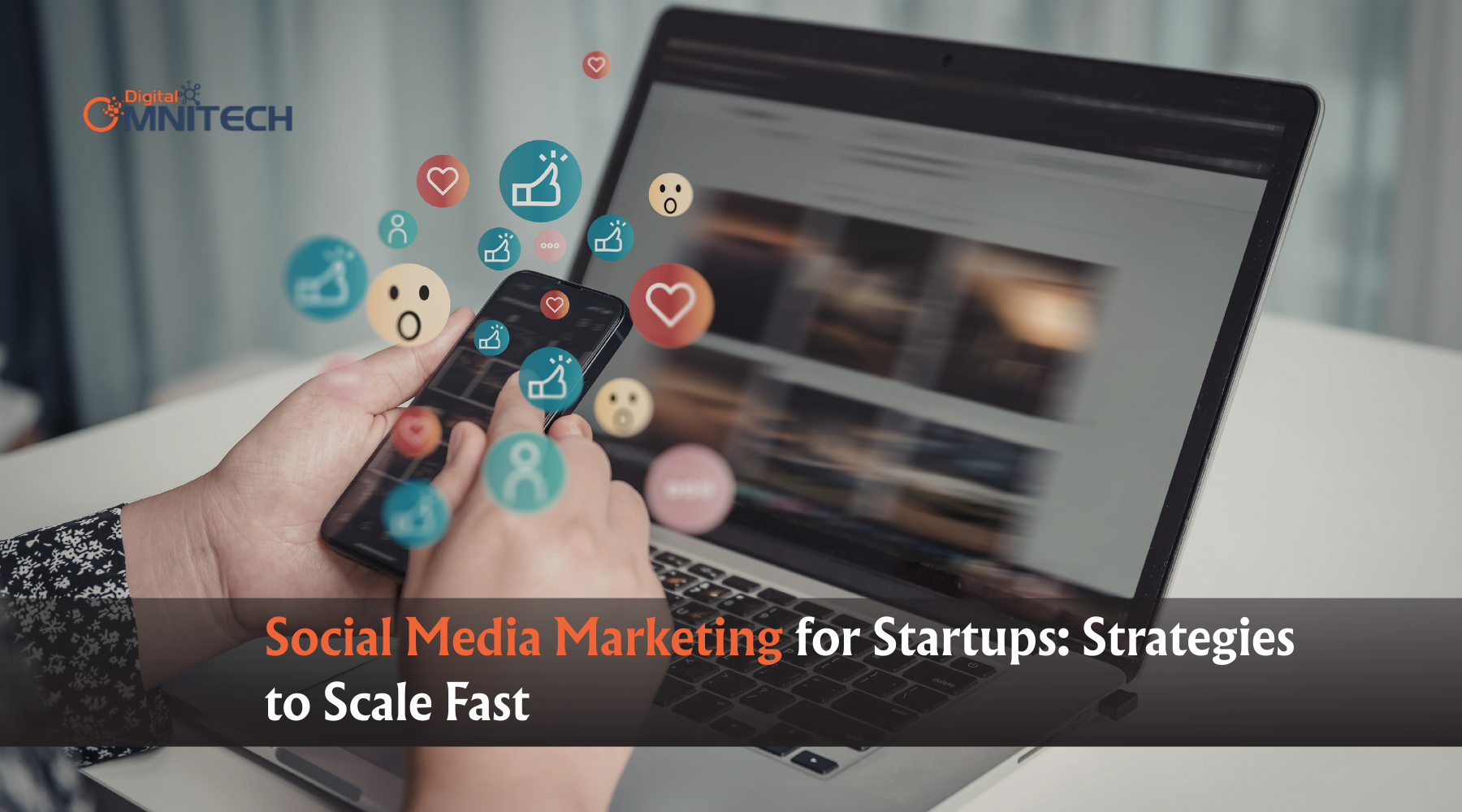
The digital marketplace has transformed the way startups establish their presence, attract potential customers, and compete with established businesses. Limited financial resources, increasing market competition, and changing consumer behavior require startups to adopt marketing strategies that deliver measurable results without excessive expenditure.
Social media marketing has become one of the most effective digital channels for achieving brand visibility, customer engagement, and sustainable business growth. A well-planned strategy allows startups to communicate with target audiences, strengthen brand authority, generate qualified leads, and improve conversion opportunities while maintaining cost efficiency.
Businesses implementing social media marketing services as part of their growth strategy are better positioned to create long-term customer relationships and improve digital visibility across competitive markets. Digital OmniTech provides strategic digital marketing solutions that help startups establish a strong online foundation while supporting scalable business growth.
Why Social Media Marketing Is Essential for Startup Growth
Every startup enters the market with the objective of creating awareness, building trust, and acquiring customers within a limited timeframe. Traditional marketing methods often demand substantial investment before producing measurable outcomes, making them less suitable for businesses operating with restricted budgets.
Social media platforms offer startups an opportunity to reach highly targeted audiences through consistent content distribution, audience engagement, and performance-driven campaigns.
An effective social media marketing strategy contributes significantly to brand recognition by increasing exposure among relevant customer segments. Continuous visibility allows businesses to remain present throughout the customer decision-making process, resulting in improved recall and stronger purchasing intent.
As customer interactions increase, businesses also gain valuable insights into consumer preferences, allowing marketing strategies to evolve according to audience behavior.
Building a Strong Brand Identity Across Social Media Platforms
Brand identity plays a decisive role in determining how potential customers perceive a startup. A recognizable visual identity combined with consistent messaging strengthens customer confidence while differentiating the business from competitors. Every element, including profile design, brand colors, content presentation, typography, communication style, and posting consistency, contributes to overall brand perception.
Consistency across all social media platforms ensures that audiences immediately recognize the business regardless of where they discover the brand. Maintaining uniform messaging also reinforces professionalism while increasing trust among prospective customers. Startups should focus on presenting a clear value proposition supported by informative content that addresses customer interests and industry-specific challenges.
Defining Business Objectives Before Creating Content
Social media marketing delivers meaningful results only when supported by clearly defined business objectives. Content creation without measurable goals frequently results in inconsistent messaging, reduced audience engagement, and inefficient resource allocation.
Establishing strategic objectives ensures that every published post contributes toward business growth while supporting broader marketing initiatives. Startups may prioritize different objectives depending on their stage of development.
Early-stage businesses often focus on increasing brand awareness and audience growth, whereas expanding organizations may prioritize lead generation, customer acquisition, website traffic, or community engagement. Every objective requires corresponding performance indicators capable of measuring campaign effectiveness over time.
Content planning should align with these objectives while maintaining consistency in publishing schedules. Educational articles, industry updates, informative videos, product demonstrations, customer experiences, and company announcements should collectively support long-term business positioning rather than isolated promotional efforts.
Organizations implementing content marketing services alongside social media strategies often achieve stronger audience retention through valuable and informative content that encourages repeat engagement.
Understanding the Target Audience
Successful marketing campaigns begin with a comprehensive understanding of customer demographics, purchasing behavior, interests, professional backgrounds, and online activity patterns. Without audience research, content frequently reaches individuals who possess little interest in the offered products or services, resulting in lower engagement and inefficient marketing expenditure.
Audience segmentation enables startups to produce highly relevant content capable of addressing specific customer challenges and expectations. Factors including age, profession, geographic location, purchasing intent, industry preferences, and digital behavior should influence content planning. Customer feedback, website analytics, engagement metrics, and market research provide valuable information that supports continuous refinement of audience targeting strategies.
Personalized communication increases engagement because audiences respond more positively to information that directly reflects their interests and requirements. Businesses that consistently publish relevant, informative, and valuable content establish stronger customer relationships while improving overall marketing performance.
Creating High-Quality Content That Builds Authority
Content quality remains one of the strongest determinants of long-term success in social media marketing. Publishing frequent promotional material without educational value often limits audience engagement because customers increasingly seek information that supports purchasing decisions and expands industry knowledge.
High-quality content demonstrates expertise while positioning startups as reliable sources of information within their respective markets. Authoritative content should address customer challenges, explain industry developments, present practical solutions, and communicate business expertise through well-researched information.
Articles, infographics, case studies, educational videos, visual demonstrations, and expert insights contribute to stronger audience engagement by delivering meaningful value beyond direct product promotion.
Consistency in content quality strengthens brand reputation over time while encouraging audience interaction and content sharing. Businesses maintaining editorial standards across every publication establish greater credibility and improve long-term customer acquisition opportunities. Strategic implementation of educational content also supports search engine visibility, creating additional opportunities for organic traffic and lead generation.
Maintaining Consistency Through Content Planning
Content consistency remains essential for sustaining audience engagement and strengthening digital visibility. Irregular publishing schedules often reduce audience retention because inconsistent communication weakens brand recall and limits customer interaction. Developing structured content calendars enables startups to maintain continuous visibility while ensuring balanced coverage of educational, promotional, informational, and engagement-focused content.
Content planning also improves operational efficiency by allowing marketing teams to prepare campaigns in advance, coordinate seasonal promotions, and align social media activities with broader business objectives. Consistent publishing supports algorithm performance while reinforcing customer familiarity with the brand.
A structured content strategy supported by Digital OmniTech enables startups to maintain regular audience engagement through planned communication that contributes directly to measurable business growth rather than isolated marketing activities.
Leveraging Paid Social Media Advertising for Faster Growth
Organic social media marketing establishes credibility and strengthens long-term audience engagement, but paid advertising significantly accelerates business growth by increasing visibility among highly targeted customer segments.
Startups operating in competitive industries often require immediate exposure to generate enquiries, website traffic, and conversions. Paid social campaigns provide greater control over audience targeting while enabling businesses to allocate marketing budgets according to measurable objectives.
Performance monitoring remains equally important throughout advertising campaigns. Metrics such as impressions, click-through rates, conversion rates, cost per acquisition, audience engagement, and customer retention provide valuable insights into campaign effectiveness.
Continuous optimization based on performance data enables startups to improve advertising efficiency while minimizing unnecessary expenditure. Businesses investing in paid social media advertising alongside organic marketing create a balanced digital strategy capable of producing both immediate and long-term business results.
Measuring Social Media Performance Through Data Analysis
Performance analysis represents one of the most valuable aspects of digital marketing because every campaign generates measurable insights. Unlike conventional marketing channels where performance evaluation may be limited, social media platforms provide detailed analytics that enable businesses to understand audience behavior and campaign effectiveness with greater accuracy.
Startups should regularly evaluate engagement rates, audience growth, website traffic, lead generation, conversion performance, content reach, customer interactions, and overall return on investment. These metrics identify successful content strategies while highlighting opportunities for improvement. Analytical reporting also supports informed decision-making by enabling businesses to allocate resources toward campaigns producing the highest business impact.
Data-driven marketing eliminates assumptions by replacing subjective decisions with measurable performance indicators. Continuous analysis allows organizations to refine targeting strategies, improve content quality, adjust publishing schedules, and optimize promotional campaigns according to changing audience preferences. Businesses utilizing social media analytics effectively are better equipped to sustain long-term digital growth while maximizing marketing efficiency.
Building Customer Trust Through Active Community Engagement
Successful social media marketing extends beyond publishing content. Long-term growth depends on establishing meaningful relationships that encourage customer confidence and brand loyalty. Active community engagement demonstrates responsiveness while strengthening the emotional connection between businesses and their audiences.
Timely responses to comments, direct messages, customer questions, and feedback contribute significantly to positive brand perception. Professional communication reflects organizational credibility while encouraging additional interactions from prospective customers. Educational discussions, customer appreciation, informative responses, and transparent communication further reinforce trust by positioning the business as approachable and knowledgeable.
Integrating Social Media with Overall Digital Marketing Strategy
Social media marketing achieves maximum effectiveness when integrated with broader digital marketing initiatives. Individual marketing channels should function collectively rather than independently, ensuring consistent communication throughout the customer journey. Coordinated strategies strengthen brand visibility while improving customer acquisition and retention across multiple digital touchpoints.
Website content, search engine optimization, email marketing, content marketing, online reputation management, and social media should support common business objectives through unified messaging and consistent branding. This integrated approach improves customer experience while increasing opportunities for lead generation and conversion. Visitors engaging with social media content should encounter the same brand identity and messaging when exploring websites, blogs, or landing pages.
Common Social Media Marketing Mistakes Startups Should Avoid
Many startups experience slow digital growth not because of limited opportunities but because of inconsistent strategy implementation. Publishing irregular content, emphasizing excessive promotional messaging, ignoring audience feedback, and neglecting performance analysis frequently reduce campaign effectiveness. Businesses focusing exclusively on follower growth without considering engagement quality often struggle to convert audiences into customers.
Another common challenge involves inconsistent branding across different social media platforms. Variations in messaging, visual identity, or communication style create confusion that weakens customer confidence. Similarly, producing content without clearly defined objectives limits marketing effectiveness because performance becomes difficult to evaluate.
Future of Social Media Marketing for Startups
The evolution of digital technology continues to reshape customer expectations and online engagement patterns. Artificial intelligence, personalized content recommendations, advanced audience segmentation, predictive analytics, automation, and immersive digital experiences are influencing the future direction of social media marketing.
Startups capable of adapting to these developments will be better positioned to achieve sustainable competitive advantages. Future marketing strategies will increasingly emphasize personalization, data intelligence, visual storytelling, and customer-centric communication. Businesses investing in continuous learning, strategic planning, and emerging technologies will strengthen customer relationships while improving marketing efficiency.
Long-term success will depend not only on maintaining digital visibility but also on consistently delivering valuable content that supports customer decision-making throughout every stage of the purchasing journey.
Conclusion
Social media marketing has become an essential growth strategy for startups aiming to increase brand awareness, attract quality leads, and build lasting customer relationships. A structured approach that combines consistent content, audience research, performance tracking, and paid campaigns helps businesses achieve sustainable growth. Digital OmniTech supports startups with result-driven social media marketing solutions that improve online visibility, customer engagement, and long-term business success.
Frequently Asked Questions
1. Why is social media marketing important for startups?
It helps startups build brand awareness, reach the right audience, generate leads, and grow their online presence cost-effectively.
2. How often should startups post on social media?
A consistent posting schedule with high-quality content is more effective than posting frequently without a strategy.
3. Can social media marketing generate leads?
Yes. Targeted campaigns and valuable content help attract qualified leads and improve conversion opportunities.
4. Should startups invest in paid social media advertising?
Yes. Paid advertising increases reach, drives faster results, and complements organic social media efforts.
5. How can Digital OmniTech help startups?
Digital OmniTech offers customized social media marketing strategies, content planning, campaign optimization, and performance tracking to support sustainable business growth.