+91 95752 60218

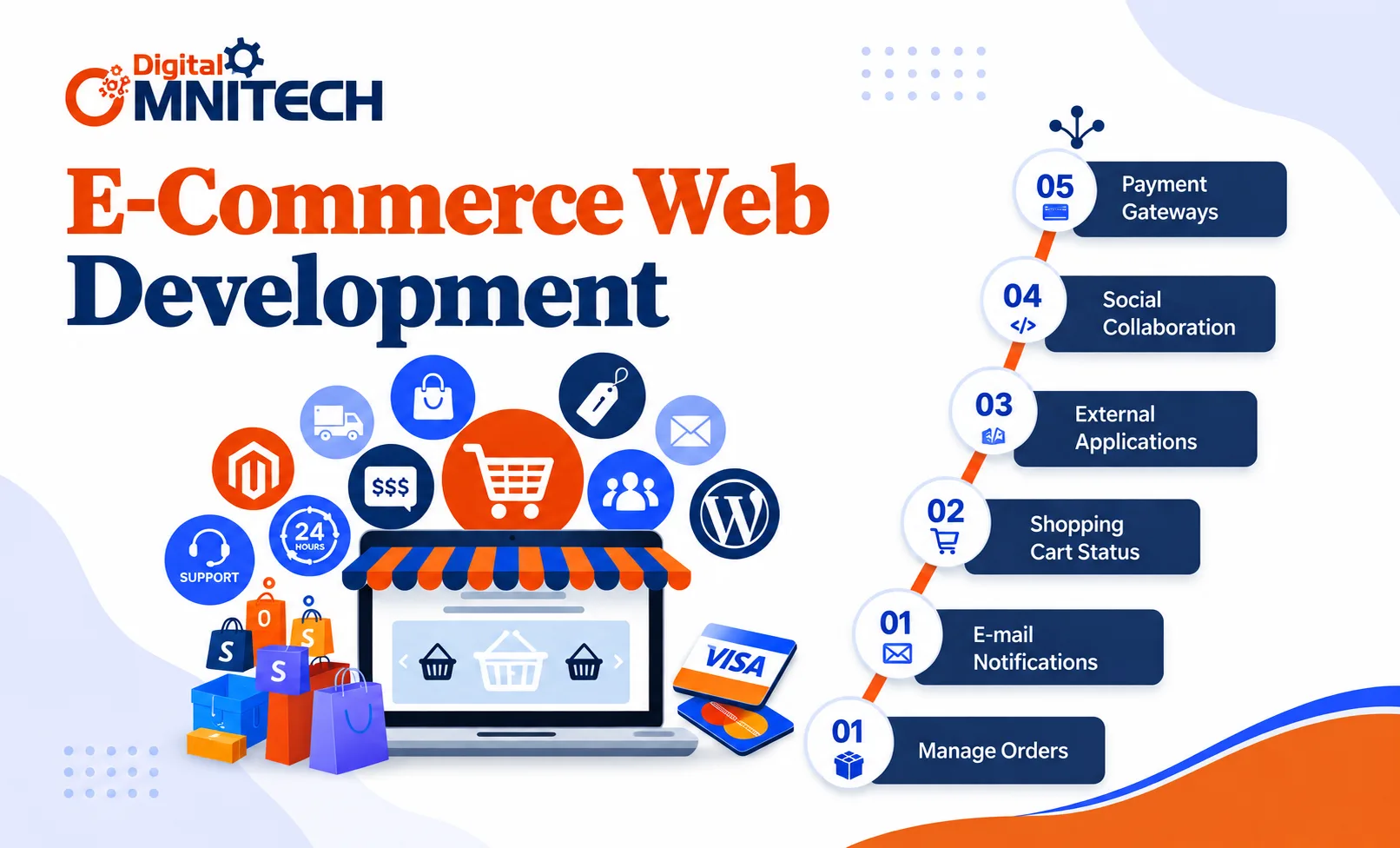
If you are planning to launch an online store, you have probably already realized that choosing the right ecommerce development Company in Indore can affect how your website looks, works, and converts. However, the right partner needs to do more than create attractive pages they should understand performance, security, SEO, integrations, scalability, and your business goals. In this guide, we’ll explain how to evaluate an ecommerce development company in Indore, choose the right platform, estimate development costs, and prepare for a successful launch.
What Is an Ecommerce Development Company in Indore?
An ecommerce development company in Indore is a web development agency that designs, develops, integrates, launches, and maintains online stores for businesses. Unlike basic website design, ecommerce development includes transactional functionality such as product catalogs, shopping carts, checkout, payments, inventory, orders, shipping, and customer accounts.
Moreover, ecommerce development connects the storefront with the business operations behind it. For example, when a customer purchases a ₹2,000 product, the website may need to process payment, reduce inventory, generate an order, notify the business, calculate shipping, and provide tracking information.
What Does an Ecommerce Development Company Do?
An ecommerce development company creates the technical infrastructure required to sell online
A professional project can include:
Ecommerce website design and UX/UI
Shopify or WooCommerce development
Custom ecommerce development
Theme and template customization
Product and catalog management
Payment gateway integration
Shipping and logistics integration
Inventory and order management
Third-party API integrations
SEO-friendly website development
Website security and backups
Performance optimization
Analytics and conversion tracking
Post-launch maintenance
For example, an Indore-based fashion retailer may need a Shopify store with product variants, UPI payments, coupon functionality, shipping integration, inventory synchronization, and Google Analytics.
How Is Ecommerce Development Different From Basic Website Design?
Ecommerce development is different from basic website design because an ecommerce store must support transactions, customer journeys, product management, and business operations.
For example, a corporate website may only need Home, About, Services, and Contact pages, while an online fashion store may require hundreds of product URLs, filters, size variants, payment processing, order tracking, returns, and inventory management.
An ecommerce website is a business system, not simply a collection of attractive web pages.
Why Does Choosing the Right Ecommerce Development Company Matter?
Choosing the right ecommerce development company matters because development decisions directly affect website performance, security, SEO, customer experience, scalability, and sales operations. A poorly planned store can become expensive to maintain even if its initial design looks impressive.
Moreover, India’s ecommerce opportunity continues to expand. India had approximately 290–300 million online shoppers in 2025, while Tier-2 and smaller cities contributed significantly to new shopper growth — Source: [IBEF, 2026].
How Does Development Quality Affect User Experience?
Website development quality affects how easily customers can discover products, evaluate options, complete checkout, and return for future purchases. For example, confusing navigation can make a customer abandon a store even when the product and price are competitive.
In addition, mobile responsiveness, fast page loading, clear product information, and simple checkout reduce unnecessary friction. A good ecommerce development partner should therefore consider customer journeys before writing code.
How Does Ecommerce Development Affect SEO?
Ecommerce development affects SEO because search engines need to crawl, understand, and index product, category, and informational pages correctly. Google specifically recommends ecommerce practices covering product data, structured data, site architecture, URLs, pagination, and crawlability.
For example, properly implemented product structured data can help Google understand information such as price, availability, shipping, and product details, potentially making eligible pages suitable for richer search appearances.
SEO should be considered during ecommerce development, not added only after the website launches.
Why Are Security and Scalability Important?
Security and scalability are important because ecommerce websites handle customer accounts, orders, payments, personal information, and business data. For example, a growing D2C brand may start with 100 products but later require thousands of SKUs, multiple warehouses, additional payment methods, and ERP integration.
Therefore, your development partner should discuss SSL, secure authentication, updates, backups, access controls, vulnerability management, and scalable hosting before launch.
What Ecommerce Development Services Should a Company Offer?
A professional ecommerce development company should offer end-to-end services covering strategy, design, development, integrations, testing, SEO, security, launch, and maintenance. The exact scope should depend on your business model and technical requirements.
Which Ecommerce Website Design Services Are Important?
Ecommerce website design services create the visual and functional experience customers use to browse and purchase products. A strong design should combine brand identity, usability, product presentation, mobile responsiveness, and conversion-focused navigation.
For example, a cosmetics store might prioritize product photography, shade filters, ingredient information, reviews, bundles, and a highly visible checkout path.
What Custom Ecommerce Development Services Should Include?
Custom ecommerce development creates functionality that standard platform features or plugins cannot efficiently provide. For example, a manufacturer may require customer-specific pricing, bulk ordering, quotation requests, dealer accounts, or integration with an existing ERP.
A development company should clearly explain which features can be handled through native platform functionality, plugins/apps, APIs, or custom code.
Which Integrations Does an Ecommerce Store Need?
Ecommerce integrations connect the website with external systems that support business operations. Depending on the project,
these may include:
Payment: Razorpay, PayU, Stripe, PayPal and other gateways
Shipping: courier aggregators and logistics APIs
Analytics: Google Analytics 4 and Google Search Console
Marketing: email, CRM, WhatsApp, and advertising platforms
Inventory: ERP, POS, warehouse, and accounting systems
Product discovery: Google Merchant Center and product feeds
For example, NPCI reported 22,716.07 million UPI transactions in June 2026, demonstrating the scale of India’s digital payment ecosystem — Source: [NPCI, 2026].
Which Ecommerce Platforms Can Businesses Use?
Ecommerce platforms provide the technology businesses use to manage products, customers, orders, payments, and storefronts. WooCommerce, Shopify, Magento/Adobe Commerce, and custom ecommerce development can all be appropriate, depending on the business model.
Platform
Suitable For
Key Strength
Consideration
WooCommerce
Small to growing businesses
Flexibility and WordPress integration
Requires ongoing technical management
Shopify
Startups and growing brands
Faster setup and managed infrastructure
Platform and app costs need consideration
Magento/Adobe Commerce
Complex or larger catalogs
Advanced ecommerce functionality
Higher technical complexity
Custom Development
Specialized requirements
Maximum control
Higher development and maintenance effort
When Should You Choose WooCommerce?
WooCommerce is suitable when you want WordPress-based content management, extensive customization, and control over your store environment. For example, a content-driven D2C brand that wants blogs, landing pages, product categories, and custom WordPress functionality may find WooCommerce practical.
When Should You Choose Shopify?
Shopify is suitable when you prioritize managed infrastructure, faster deployment, and easier store administration. Shopify’s current India pricing page lists plans starting at ₹1,994 per month when paid monthly, with lower effective monthly prices on annual billing; additional costs can vary by plan and setup. — Source: [Shopify India, 2026].
When Should You Consider Magento or Custom Development?
Magento/Adobe Commerce or custom development can make sense when your store has complex catalogs, B2B workflows, multiple markets, advanced pricing rules, or specialized integrations.
For example, a manufacturer selling to distributors may require dealer-specific pricing and account permissions that go beyond a simple consumer storefront.
The best ecommerce platform is the one that fits your operational requirements, not simply the platform with the most features.
What Is the Ecommerce Website Development Process?
The ecommerce website development process is a structured sequence that moves from business requirements to platform selection, design, development, testing, launch, and ongoing optimization.
1.Discovery and Requirements
First, the agency should understand your products, customers, business model, competitors, sales channels, and growth objectives. For example, a B2C fashion store needs different workflows from a B2B industrial supplier.
2.Platform Selection and Planning
Next, the team should compare platforms according to budget, functionality, integrations, catalog size, technical resources, and scalability. The agency should explain why its
recommendation fits your business rather than pushing one platform automatically.
3.UX/UI Planning and Development
Then, designers create the information architecture, wireframes, user flows, and visual interface before developers implement the store. For example, category navigation should allow shoppers to move from a broad product category to specific products without unnecessary steps.
4.Integrations and Product Setup
After the core website is developed, the team configures products, variants, payments, shipping, taxes, inventory, coupons, customer accounts, and third-party integrations.
5.Testing and SEO Setup
Testing should cover mobile responsiveness, browser compatibility, checkout, payment flows, forms, product filters, redirects, page speed, security, and analytics tracking. SEO setup should also include crawlable navigation, suitable URLs, metadata, structured data, canonicalization, and indexation checks.
6.Launch and Ongoing Maintenance
Finally, the team should deploy the website, monitor errors, verify analytics, submit relevant feeds, and provide maintenance. Google recommends planning ecommerce launches carefully because changes to site structure and URLs can affect crawling and indexing.
What Features Should a Professional Ecommerce Website Include?
A professional ecommerce website should include the features customers need to discover, evaluate, purchase, and manage products efficiently. The exact feature set should be based on the store’s business model.
Which Customer-Facing Features Are Essential?
Essential customer-facing features include:
Responsive mobile and desktop design
Product searchCategory and product filters
Product images and descriptions
Product variants
Shopping cart
Wishlist where appropriate
Secure checkout
Multiple payment options
Customer accounts
Product reviews
Coupons and promotions
Shipping information
Order tracking
Returns and refund information
For example, a footwear store should allow customers to filter by size, color, price, and style before adding a product to the cart.
Which Backend Features Should Businesses Consider?
Backend features manage the operational side of ecommerce. Important capabilities include inventory management, order management, customer management, product management, reporting, tax configuration, shipping rules, and promotional controls.
Moreover, integrations become increasingly important as a business grows. A store may eventually need its website to exchange data with accounting software, ERP systems, POS systems, marketplaces, or warehouse platforms.
What SEO Features Should an Ecommerce Website Have?
SEO functionality should include crawlable navigation, optimized URLs, metadata controls, internal linking, XML sitemaps, canonical URLs, structured data, optimized images, and indexation controls.
Google recommends using relevant ecommerce structured data and product feeds to help its systems understand ecommerce information.
How Much Does Ecommerce Website Development Cost in Indore?
Ecommerce website development cost in Indore varies according to platform, design complexity, customization, number of products, integrations, functionality, security, hosting, and ongoing support. A single fixed price cannot accurately represent every ecommerce project.
For market context, one 2026 Indian development pricing guide estimates standard ecommerce projects from around ₹40,000 and custom commerce projects at ₹10 lakh or more, but these figures are agency-specific market estimates rather than an official industry average — Source: [Lenoretech, 2026].
What Factors Increase Ecommerce Development Cost?
The main cost drivers include:
Platform: Shopify, WooCommerce, Adobe Commerce, or custom development.
Design: Template-based design generally requires less work than a fully custom interface.
Catalogue size: Hundreds or thousands of products require more setup and data management.
Integrations: ERP, CRM, payment, shipping, and marketplace integrations add complexity.
Custom functionality: B2B pricing, subscriptions, marketplaces, or advanced product
configuration require additional development.
Maintenance: Updates, backups, security, support, and performance optimization create ongoing costs.
For example, a 50-product Shopify store with standard payment and shipping integrations will usually have a very different project scope from a multi-vendor marketplace connected to an ERP.
A reliable ecommerce quote should explain deliverables and assumptions instead of presenting only one unexplained number.
How Should You Choose an Ecommerce Development Company in Indore?
Choosing an ecommerce development company in Indore requires evaluating technical capability, relevant experience, communication, project scope, security, SEO knowledge, ownership, and post-launch support.
What Should You Check in an Ecommerce Agency Portfolio?
First, examine whether the agency has developed projects similar to yours. A portfolio should show more than attractive screenshots; look for live websites, relevant industries,
ecommerce functionality, mobile usability, and measurable project outcomes where available.
For example, a B2B manufacturer should prioritize an agency experienced with product catalogs, bulk ordering, quotation workflows, and business integrations rather than selecting an agency solely because it has visually impressive restaurant websites.
What Questions Should You Ask Before Hiring?
Before signing a contract, ask:
Which platform do you recommend and why?
Who owns the website, domain, hosting, code, and accounts?
What exactly is included in the project scope?
Which integrations are included?
How will SEO be handled during development?
How will website security be managed?
What testing process do you follow?
What happens after launch?
Are maintenance and support included?
What additional costs could arise?
What is the expected timeline?
Can you provide relevant case studies or references?
Why Are Ownership and Support Important?
Ownership and support are important because your ecommerce website becomes a long-term business asset. For example, you should have appropriate administrative access to your domain, hosting, analytics, Search Console, ecommerce platform, payment accounts, and other critical services.
A low initial quote can become expensive if ownership, maintenance, integrations, and support are excluded from the scope.
What Tools and Technologies Are Useful for Ecommerce Development?
Ecommerce tools support different stages of website development, measurement, optimization, payments, and operations. A practical technology stack might combine Shopify or WooCommerce, Google Analytics 4, Google Search Console, Google Merchant Center, payment gateways, shipping tools, and CRM or ERP systems.
Which Analytics and SEO Tools Should You Use?
Google Analytics 4 helps businesses analyze customer behavior and conversions, while Google Search Console provides search performance and indexing information. Google Merchant Center can help businesses share product data with Google for eligible ecommerce experiences.
Which Ecommerce Technology Stack Fits Different Businesses?
A startup might use Shopify + payment gateway + shipping integration + GA4 + Search Console for a relatively fast launch.
A growing content-led brand might choose WordPress + WooCommerce + SEO tools + analytics + inventory integration.
A large organization might need Adobe Commerce or custom/headless architecture + ERP + CRM + warehouse + advanced analytics.
What Should You Do Before Hiring an Ecommerce Development Company?
Before hiring an ecommerce development company, you should define your business objectives, customer requirements, product information, integrations, budget range, and expected project outcomes.
What Should You Prepare Before Requesting a Quote?
Prepare the following information:
Business model and target customers
Product categories and approximate SKU count
Product images and descriptions
Required payment methods
Shipping locations and delivery requirements
Existing website or ecommerce platform
Required integrations
Competitor examples
SEO requirements
Desired launch timeline
Initial budget range
For example, telling an agency that you need an online store is less useful than explaining that you sell 500 SKUs, need Razorpay and shipping integration, want customer accounts, and plan to expand into multiple Indian states.
How Should You Compare Agency Proposals?
Compare proposals based on scope, deliverables, technology, integrations, timeline, SEO, security, testing, ownership, training, maintenance, and support, rather than comparing only the final price.
A useful proposal should make it clear what happens before, during, and after launch.
Conclusion
An ecommerce development company in Indore should do more than build a visually appealing online store; it should create a secure, scalable, SEO-friendly, user-focused ecommerce system aligned with your business goals.
Moreover, India’s ecommerce market continues to expand, with online retail growth increasingly reaching Tier-II and Tier-III cities. IBEF reports that India’s online shopper base reached roughly 290–300 million in 2025, highlighting the growing opportunity for businesses that build strong digital commerce experiences — Source: [IBEF, 2026].
Therefore, focus on the right questions before choosing an agency. Compare platforms, evaluate portfolios, clarify ownership, understand costs, review security and SEO practices, and confirm post-launch support.
The right ecommerce development partner should build a store that can grow with your business—not simply a website that looks good on launch day.
If you are planning an ecommerce project, prepare your requirements and request a detailed proposal that explains the technology, functionality, integrations, timeline, cost, and ongoing support.
Written by Digital OmniTech SEO Content Team Ecommerce, website development, and digital marketing content specialists.
Reviewed by Digital OmniTech Web & SEO Team Website development, ecommerce technology, and search optimization specialists.
Frequently Asked Questions
1. What does an ecommerce development company in Indore do?
An ecommerce development company in Indore designs, develops, integrates, launches, and maintains online stores. Services may include Shopify or WooCommerce development, custom ecommerce solutions, payment gateway integration, shipping, inventory management, SEO, security, performance optimization, and ongoing support.
2. How much does ecommerce website development cost in Indore?
Ecommerce website development costs in Indore depend on the platform, design, number of products, integrations, custom features, and maintenance requirements. A basic store may require a smaller investment, while custom ecommerce platforms, B2B stores, or marketplaces can cost significantly more.
3. Which ecommerce platform is best for an online store?
There is no single platform that is best for every business. Shopify is suitable for businesses looking for faster setup and managed infrastructure, while WooCommerce offers flexibility and WordPress integration. Adobe Commerce or custom development may be better for larger businesses with complex catalogs, B2B requirements, or advanced integrations.
4. How long does it take to develop an ecommerce website?
The development timeline depends on the website’s size and functionality. A basic ecommerce store may take a few weeks, while a customized store with advanced features, multiple integrations, and extensive product catalogs may take several months.
5. What features should a professional ecommerce website include?
A professional ecommerce website should generally include responsive design, product search and filters, product pages, shopping cart, secure checkout, payment options, customer accounts, reviews, coupons, order tracking, shipping information, and inventory management.
6. Does an ecommerce development company provide SEO services?
Many ecommerce development companies provide SEO-friendly development and technical SEO setup. This may include optimized URLs, metadata, internal linking, XML sitemaps, canonical URLs, structured data, image optimization, crawlability, and indexation controls. SEO should ideally be considered during development rather than after launch.
7. Can an ecommerce website integrate with payment and shipping services?
Yes. Ecommerce websites can integrate with payment gateways such as Razorpay, PayU, Stripe, and PayPal, as well as shipping platforms, courier services, inventory systems, ERP software, CRM platforms, analytics tools, and other third-party applications.