+91 95752 60218

Digital marketing has evolved significantly as search engines have become more sophisticated in understanding user behavior and search intent. Modern consumers no longer search only for products or services.
Instead, they search for solutions to specific challenges, compare available options, and seek reliable information before making purchasing decisions. This shift has transformed the way businesses approach search engine optimization.
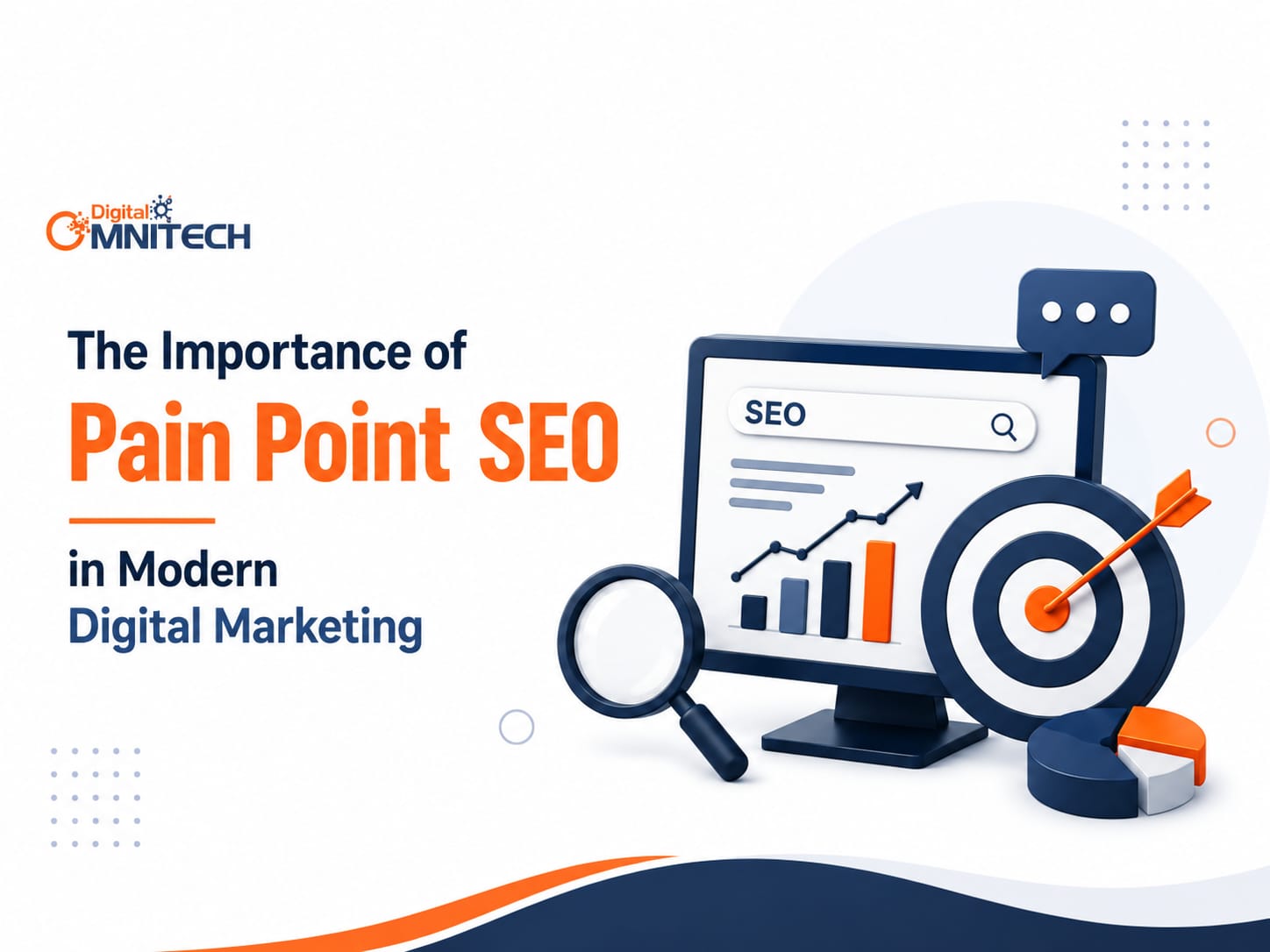
Pain Point SEO focuses on identifying customer problems and creating valuable content that directly addresses those concerns. Rather than emphasizing keywords alone, this strategy prioritizes user needs, making content more relevant, informative, and beneficial.
Digital OmniTech recognizes that businesses achieve sustainable online growth by combining Professional SEO Services, Content Marketing Services, and customer-focused digital strategies that deliver meaningful results and long-term search visibility.
Understanding Pain Point SEO
Pain Point SEO is a customer-focused optimization strategy that centers on solving the problems users experience during their search journey. Every customer begins with a question, challenge, or requirement that motivates an online search.
Businesses that identify these concerns and develop comprehensive content around them create stronger connections with their target audience. Unlike traditional optimization methods that primarily target search rankings, Pain Point SEO emphasizes usefulness and relevance.
Search engines increasingly reward content that answers user questions accurately while providing practical guidance. As a result, businesses that adopt this approach often experience improved engagement, stronger authority, and higher organic visibility.
Why Customer Intent Has Become More Important
Search engines have shifted their focus toward understanding why users perform specific searches rather than simply matching keywords within web pages. Modern algorithms evaluate whether content satisfies the underlying purpose of each search query.
Some users seek educational information, while others compare products or evaluate service providers before making a final decision. Businesses that recognize these different stages of customer intent can develop content that supports every phase of the buying journey.
Providing complete and relevant information encourages visitors to remain on the website longer, explore additional pages, and return when further information is required. These positive user interactions contribute to stronger search performance while reinforcing business credibility.
Identifying Customer Challenges
Every industry serves customers facing different concerns. Some individuals look for affordable solutions, while others prioritize quality, reliability, efficiency, or expert guidance. Identifying these recurring concerns forms the foundation of an effective Pain Point SEO strategy.
Customer support enquiries, consultation requests, online reviews, website feedback, and frequently asked questions often reveal valuable information about audience expectations. Businesses that carefully analyze these insights gain a deeper understanding of customer behavior and can create highly relevant content addressing actual market needs.
This research-driven approach reduces unnecessary content creation while improving overall content quality and search relevance.
Creating Valuable Content That Solves Problems
Content remains the driving force behind every successful SEO strategy. However, modern digital marketing requires more than publishing articles filled with keywords. Valuable content educates readers, answers important questions, and provides practical solutions supported by reliable information.
Businesses should focus on producing detailed service pages, educational blogs, buying guides, comparison articles, and informative resources that assist users in making informed decisions. Search engines consistently reward content demonstrating expertise, relevance, and usefulness.
Well-structured content also improves user experience by presenting information clearly and logically. Visitors appreciate content that simplifies complex topics while providing trustworthy guidance.
Building Authority Through Expertise
Authority develops gradually through consistent publication of accurate and informative content. Businesses that regularly share industry knowledge become recognized as reliable sources of information within their respective markets.
Authoritative content encourages visitors to reference published resources, return for additional information, and recommend valuable articles to others. These positive engagement signals contribute to stronger search visibility while enhancing overall business credibility.
Rather than producing large volumes of low-quality content, businesses achieve better results by publishing fewer but more comprehensive resources that thoroughly address customer concerns.
Improving Search Visibility with Relevant Content
Search engines evaluate multiple quality indicators when determining rankings. Relevance has become one of the most influential factors because it directly affects user satisfaction.
Businesses implementing Pain Point SEO naturally create broader topical coverage by answering related customer questions within a single subject area. This comprehensive approach improves keyword relevance without excessive optimization while increasing opportunities to rank for multiple search variations.
Enhancing User Experience Through Helpful Information
User experience extends beyond website design. Visitors expect accurate information, simple navigation, readable formatting, and content that answers their questions quickly.
Businesses that prioritize clarity and usefulness reduce visitor frustration while increasing engagement. Helpful resources encourage users to spend additional time exploring related articles, strengthening website performance metrics that support long-term organic growth.
Modern digital marketing increasingly rewards websites that consistently deliver positive user experiences rather than relying solely on technical optimization techniques.
Supporting Long-Term Business Growth
Businesses seeking sustainable online success benefit from focusing on customer education rather than short-term promotional tactics. Educational content continues generating value long after publication because it remains useful for future audiences searching for similar information.
Digital OmniTech emphasizes long-term digital strategies that combine customer-focused content, technical optimization, and continuous improvement. By aligning business objectives with customer needs, organizations strengthen search visibility while building lasting trust within competitive markets.
Developing a Sustainable Content Strategy
A successful SEO strategy depends on consistency rather than occasional publishing. Businesses should create content that addresses different stages of the customer journey, from initial awareness to final decision-making. Informative articles, service pages, detailed guides, educational resources, and Content Management Services collectively strengthen topical authority while improving overall website relevance.
Publishing high-quality content regularly signals that a business remains active within its industry. Search engines recognize websites that consistently provide updated and useful information, increasing opportunities to achieve stronger organic visibility. Businesses that prioritize educational content over excessive promotional messaging often establish greater trust among potential customers.
Improving Conversion Opportunities
Attracting website visitors represents only one aspect of digital marketing success. Businesses must also convert visitors into enquiries, customers, or long-term clients. Content developed around customer challenges naturally improves conversion opportunities because it reduces uncertainty during the buying process.
When visitors find complete answers to their questions, they develop greater confidence in the business providing the information.
Trust established through educational resources frequently influences purchasing decisions more effectively than direct promotional messaging. Businesses that solve customer problems before requesting a sale often experience stronger engagement and higher conversion rates.
Measuring the Success of SEO Strategies
Evaluating SEO performance requires monitoring several important indicators over time. Organic traffic growth, keyword visibility, visitor engagement, conversion rates, and search impressions provide valuable insights into overall digital performance. Businesses should review these metrics regularly to identify successful strategies and opportunities for further improvement.
Effective measurement also involves understanding user behavior. Time spent on pages, navigation patterns, and returning visitor rates reveal how audiences interact with published content. These insights allow businesses to refine future content strategies while improving website usability and customer satisfaction.
Organizations that consistently analyze performance data make more informed marketing decisions and allocate resources more efficiently.
The Future of Customer-Focused SEO
Search technology continues advancing as algorithms become increasingly capable of understanding user intent and content quality. Businesses that prioritize customer satisfaction instead of search engine manipulation remain better positioned for long-term success.
Artificial intelligence, semantic search, and natural language processing continue influencing how search engines evaluate web content. These developments reinforce the importance of creating informative resources that answer genuine customer questions rather than relying solely on traditional optimization techniques.
Businesses adopting Pain Point SEO as a long-term strategy are more likely to remain competitive because their content evolves alongside changing customer expectations and search engine standards.
Building Sustainable Digital Growth
Long-term digital growth depends upon delivering consistent value through every stage of the customer journey. Businesses that continually educate, inform, and support their audiences strengthen both online visibility and customer loyalty. Instead of pursuing temporary ranking improvements, organizations should invest in comprehensive digital strategies that emphasize quality, relevance, and user experience.
Strong website architecture, informative content, Technical SEO customer-focused messaging, and continuous optimization collectively contribute to sustainable SEO performance.
Conclusion
Modern digital marketing requires businesses to understand customers before attempting to market products or services. Pain Point SEO represents a strategic approach that aligns content with genuine customer needs, resulting in stronger engagement, improved search visibility, and greater long-term credibility.
Businesses that consistently address customer concerns through valuable content create stronger relationships while supporting sustainable organic growth. Digital OmniTech helps businesses develop customer-focused digital marketing strategies that combine technical optimization, high-quality content, and long-term SEO planning.
Through ethical optimization practices and solution-oriented content development, Digital OmniTech supports organizations in strengthening their online presence while adapting to changing search engine expectations. Businesses seeking measurable and sustainable digital growth continue to benefit from strategic marketing approaches delivered by Digital OmniTech.
FAQs
1. What is Pain Point SEO?
Pain Point SEO is an SEO strategy that focuses on identifying customer problems and creating content that provides valuable solutions, improving both user experience and search visibility.
2. Why is Pain Point SEO important in modern digital marketing?
It helps businesses align content with customer intent, improve organic rankings, increase engagement, and build long-term trust with their target audience.
3. How does Pain Point SEO improve business growth?
By attracting qualified visitors, answering customer questions, increasing website credibility, and improving conversion opportunities through solution-focused content.
4. Can every business benefit from Pain Point SEO?
Yes. Businesses across different industries can use Pain Point SEO to better understand customer needs, create relevant content, and strengthen their long-term digital marketing performance.