+91 95752 60218

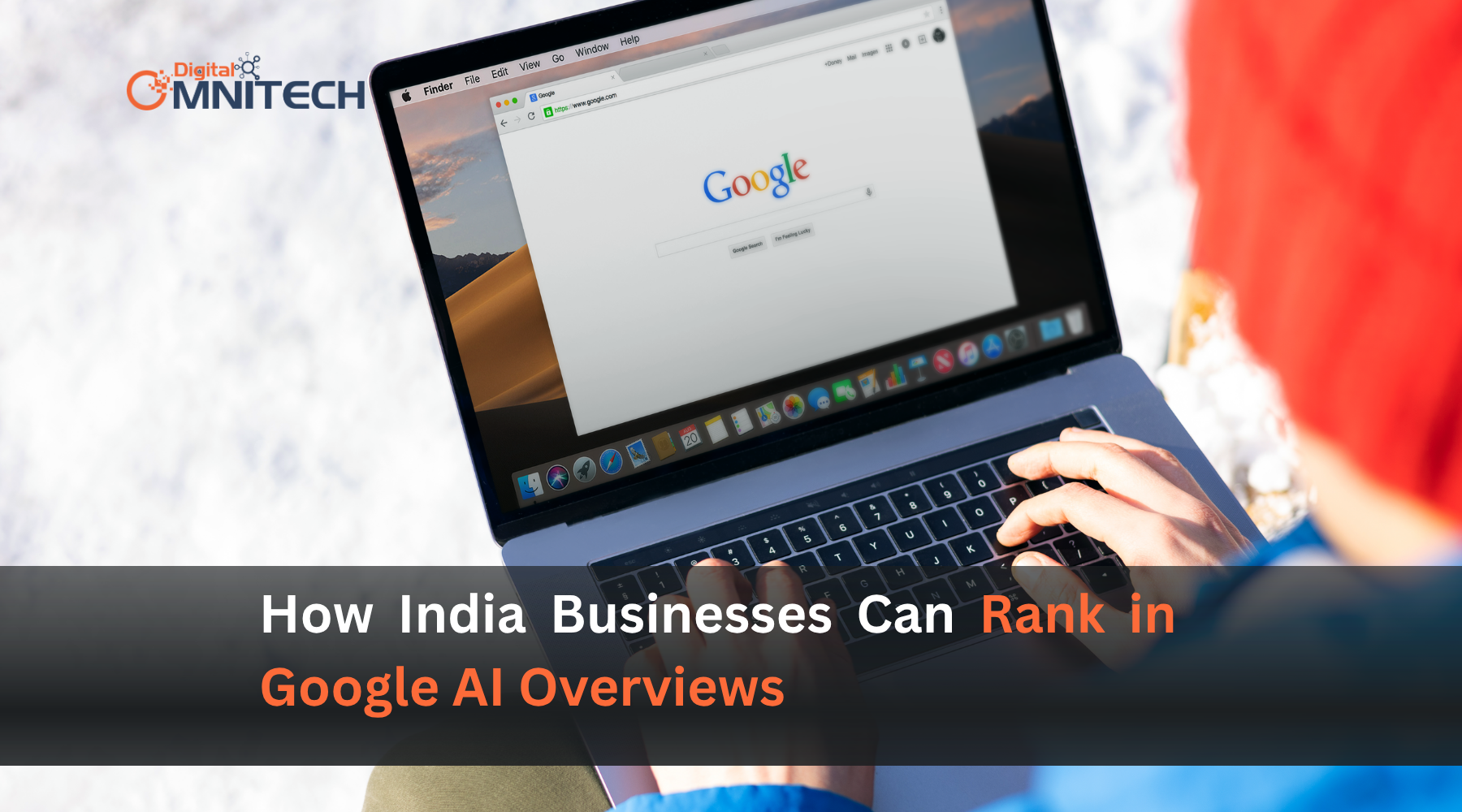
Google search is changing from a list of blue links into a more answer-focused experience. Google AI Overviews can summarise information from multiple sources directly on the search results page, helping users understand a topic before they visit a website. For businesses in India, this shift changes how online visibility should be approached. Ranking is no longer only about reaching the first page for a keyword. It is also about becoming a reliable source that search systems can understand, verify, and use when creating useful answers for users.
Businesses that depend on organic visibility need to prepare for this change carefully. An AI Overview may include explanations, comparisons, recommendations, steps, and references from websites that demonstrate relevance, accuracy, authority, and strong topical coverage. A business website that provides incomplete information, generic service pages, weak content, or unclear business details may struggle to appear in these results. On the other hand, a website that solves real search problems, uses clear structure, demonstrates expertise, and maintains strong technical performance has a better chance of earning visibility across traditional search results and AI-driven search experiences.
The opportunity is significant for Indian businesses because many industries still rely on thin pages, copied content, keyword stuffing, and generic claims. Businesses that create genuinely useful resources can separate themselves from competitors. The objective should not be to write content for an algorithm alone. The objective should be to build a website that gives Google enough clear, accurate, and well-organised information to confidently present it to users.
Understanding Google AI Overviews and Their Role in Search
Google AI Overviews are AI-generated summaries that may appear for searches where users need a broad explanation, comparison, process, recommendation, or decision-making support. Instead of showing only individual web pages, the search engine can combine information from several relevant sources and present a structured answer. Users may see key points, follow-up questions, product or service considerations, step-by-step guidance, or links to sources that support the overview.
This means a website does not need to rank at position one in every case to contribute to an AI-generated answer. However, it must still be considered trustworthy and relevant enough to be selected as a supporting source. The same foundations that improve organic visibility remain important: helpful content, clear website architecture, topical relevance, technical quality, credible references, and a positive user experience. The difference is that AI-driven search can reward websites that answer multiple connected questions thoroughly instead of targeting one narrow keyword without useful context.
For Indian businesses, this requires a move away from isolated landing pages. A service page should not simply state that a company offers a service in a city. It should explain the service, who it is for, what process is followed, what outcomes can be expected, what factors influence cost or timelines, and how customers can make an informed decision. The stronger the information ecosystem around a service, the more likely the website is to be recognised as a useful source.
Build Content Around Search Intent, Not Just Keywords
Keywords remain important because they reveal how users search, but keyword placement alone will not make a page suitable for AI Overviews. Businesses should study the purpose behind a search query. A person searching for “best accounting software for small business” may be comparing options. A person searching for “how to choose a digital marketing agency” needs evaluation criteria. Someone searching for “website design cost in India” wants clarity on pricing factors, scope, and expected deliverables. Each query requires content that addresses the underlying question in detail.
A strong content strategy begins by dividing search intent into informational, commercial, transactional, and navigational categories. Informational searches are ideal for detailed guides, checklists, explainers, and frequently asked questions. Commercial searches require comparison pages, buyer guides, service breakdowns, and case-study-led explanations. Transactional searches should lead to clear service pages with contact options, pricing guidance where appropriate, and strong trust signals. Navigational searches should be supported through accurate brand information, consistent business listings, and well-maintained profile pages.
Digital OmniTech can support businesses in identifying search topics that reflect actual customer questions rather than simply chasing high-volume keywords. A practical topic cluster should include a primary service page, supporting articles, detailed FAQs, location pages where relevant, and resources that answer related questions. This creates a connected content structure that helps search engines understand the depth of expertise behind the website.
Create Comprehensive Topic Clusters for Core Services
A topic cluster is a group of related pages that collectively cover a subject in depth. For example, a business offering website design should not rely only on one page titled “Website Design Services.” It should also publish resources on website planning, responsive design, website speed, user experience, conversion-focused design, website redesign, business website costs, industry-specific website requirements, and website maintenance. These pages should link naturally to each other and guide users toward the relevant service page.
This approach is valuable for Google AI Overviews because AI systems need context. A single page can answer one question, but a complete cluster shows that the business understands the subject from multiple angles. It also gives search engines more opportunities to find a relevant page for different user queries. A detailed guide may be cited for an informational question, while a service page may rank for a commercial search. Together, they strengthen the website’s overall authority on the topic.
Use Clear Heading Structure and Direct Answers
Headings are not just visual formatting. They help users and search engines understand the hierarchy of information. Every page should have one clear H1 that explains the main topic. H2 headings should divide the page into major sections, while H3 headings can explain specific subtopics, steps, examples, or considerations. A clear structure makes content easier to scan and easier for search systems to interpret.
Pages should answer important questions directly near the beginning of the relevant section. For example, if a page is about local SEO, it should clearly explain what local SEO is before moving into its benefits, process, timelines, and pricing factors. Direct answers should then be expanded with practical context, examples, and limitations. This balance is important because short answers may be useful for extraction into AI-generated results, while detailed explanations help establish expertise and provide value for visitors who continue reading.
Demonstrate First-Hand Expertise and Real Business Experience
AI-driven search results are more likely to favour content that appears credible, original, and useful. Businesses should avoid publishing generic articles that could apply to any company in any country. Instead, content should include real operational knowledge, practical observations, industry-specific processes, common client concerns, and clear explanations of what happens in real projects.
For example, a logistics company can explain how route planning affects delivery efficiency, what information fleet managers should monitor, and what common operational problems occur during peak seasons. A real estate business can explain the documentation process, location-specific buying considerations, and common buyer mistakes. A manufacturing business can publish guides on material selection, quality checks, production timelines, and procurement requirements. Such content demonstrates that the business understands the subject beyond surface-level definitions.
Where possible, include original photographs, diagrams, screenshots, project workflows, expert author details, and case studies with verifiable information. These elements make the content more useful and harder to replicate. They also help visitors trust the business. Digital OmniTech focuses on content systems that allow companies to present their actual expertise in a structured format rather than relying on broad promotional statements.
Strengthen Technical SEO and Website Performance
Even excellent content can underperform if the website is difficult for search engines to crawl or frustrating for users to access. Technical SEO is the operational foundation of search visibility. Businesses should ensure that important pages are indexable, mobile-friendly, secure, fast-loading, and free from unnecessary errors. A slow or poorly structured website can reduce user engagement and make it harder for search systems to process content effectively.
Core technical checks should include page speed, mobile responsiveness, XML sitemap availability, robots.txt configuration, internal linking, canonical tags, broken links, duplicate content, image optimisation, structured data, and crawl errors. The website should use descriptive URLs and logical navigation so users can move easily between services, resources, and contact pages. Important content should not be hidden behind complicated scripts or inaccessible page elements.
Use Structured Data to Clarify Business Information
Structured data helps search engines understand specific elements on a page, such as an organisation, service, article, FAQ, product, review, event, or local business. It does not guarantee an AI Overview placement, but it can improve the clarity of website information and support eligibility for enhanced search features.
Businesses should use structured data carefully and only for information that is visible on the page. An organisation schema can clarify brand details, while local business schema can support location-related information. Article schema can help identify published content, and FAQ schema may be suitable when a page includes genuine questions and answers. Incorrect or misleading markup can create problems, so implementation should be reviewed regularly.
Improve Trust Signals Across the Website
Trust is a major factor in digital visibility, especially for topics involving money, health, legal matters, education, business decisions, or personal information. A website should make it easy for visitors to understand who runs the business, what services are offered, where the business operates, and how customers can contact the team.
Strong trust signals include a complete About page, author or expert profiles, physical address details where applicable, phone numbers, professional email addresses, privacy policy, terms and conditions, refund or cancellation policies, testimonials, case studies, client reviews, industry certifications, and accurate business profiles. These details should be consistent across the website and relevant online listings.
For local businesses in India, consistency is especially important. The business name, address, phone number, working hours, website URL, and service categories should match across official profiles and directories. Inconsistent information can create confusion for users and reduce confidence in the business identity.
Earn Relevant Mentions and Quality Backlinks
Backlinks remain an important signal because they help search engines understand whether other credible websites consider a business or resource worth referencing. However, the focus should be on relevance and quality rather than quantity. Low-quality links, paid link schemes, copied directory listings, and unrelated submissions can weaken a website’s long-term position.
Businesses should earn links by publishing resources that are genuinely useful enough to reference. Original research, industry reports, data studies, detailed guides, expert interviews, local market insights, tools, templates, and case studies can attract relevant mentions. Partnerships with professional associations, educational institutions, local business communities, and industry publications can also create legitimate visibility opportunities.
A good link-building approach should support brand credibility, not just rankings. If a link comes from a relevant source and sends qualified visitors, it is usually more valuable than dozens of links from weak or unrelated websites. Digital OmniTech helps businesses focus on sustainable authority-building methods that support both search visibility and reputation.
Optimise for Local Search and Regional Relevance
Many Indian businesses serve specific cities, states, or regions. Local relevance should be reflected through useful location pages, accurate business profiles, local customer reviews, service-area details, local case studies, and content that addresses regional needs. A local page should not simply replace one city name with another. It should provide information that is genuinely useful for customers in that location.
For example, a service business can explain service availability, local project timelines, common regional requirements, nearby service areas, and location-specific contact details. Businesses with multiple branches should create unique pages for each genuine location and avoid publishing duplicate pages for areas where they do not operate.
Local search optimisation also depends on reviews. Businesses should request honest feedback from real customers and respond professionally to reviews. Reviews provide social proof, help customers make decisions, and can strengthen local relevance when they naturally mention services or locations.
Measure Visibility Beyond Traditional Rankings
Businesses should not judge performance only by whether a page ranks in the first three positions. AI-driven search may affect click patterns, impressions, and the type of queries that bring visitors to a website. It is important to monitor organic traffic, impressions, click-through rate, conversion rate, branded search growth, engagement time, leads, calls, and form submissions.
Search performance should be reviewed at the page and topic level. If a guide receives impressions but few clicks, the title and meta description may need improvement. If a service page receives traffic but few enquiries, the offer, page structure, trust signals, or call-to-action may need refinement. If a topic cluster performs well, businesses can expand it with more detailed subtopics and updated information.
Conclusion
Ranking in Google AI Overviews requires businesses in India to focus on useful content, topical depth, technical quality, trust, and genuine expertise. The most effective approach is not to chase shortcuts or attempt to manipulate AI-generated results. It is to build a website that answers customer questions better than competing pages and provides clear evidence that the business understands its industry.
A strong digital presence takes consistent work, but it creates long-term value. Businesses that improve their content structure, technical performance, local relevance, and authority will be better positioned for both traditional rankings and evolving AI search experiences. Digital OmniTech helps businesses create search-focused digital foundations that are designed for visibility, credibility, and sustainable lead generation.
Frequently Asked Questions
1. What are Google AI Overviews?
Google AI Overviews are AI-generated summaries that can appear in search results to help users understand a topic, compare options, or find relevant information quickly. They may include links to websites used as supporting sources.
2. Can a small business in India appear in Google AI Overviews?
Yes. Small businesses can appear when their content is relevant, accurate, well-structured, and useful for the query. A strong website with genuine expertise can compete effectively even without being a large brand.
3. Does ranking first on Google guarantee inclusion in AI Overviews?
No. Traditional ranking is helpful, but inclusion is not guaranteed. AI Overviews may use multiple sources based on relevance, content quality, authority, and the specific user query.
4. What type of content is most useful for AI search visibility?
Detailed guides, buyer resources, practical checklists, service explanations, comparison pages, FAQs, case studies, and original research are useful because they answer questions clearly and provide meaningful context.
5. How long does it take to improve visibility in Google AI Overviews?
There is no fixed timeline. Results depend on competition, website quality, technical health, content depth, industry authority, and how frequently Google updates its search results. Consistent improvements usually produce better long-term outcomes.