+91 95752 60218

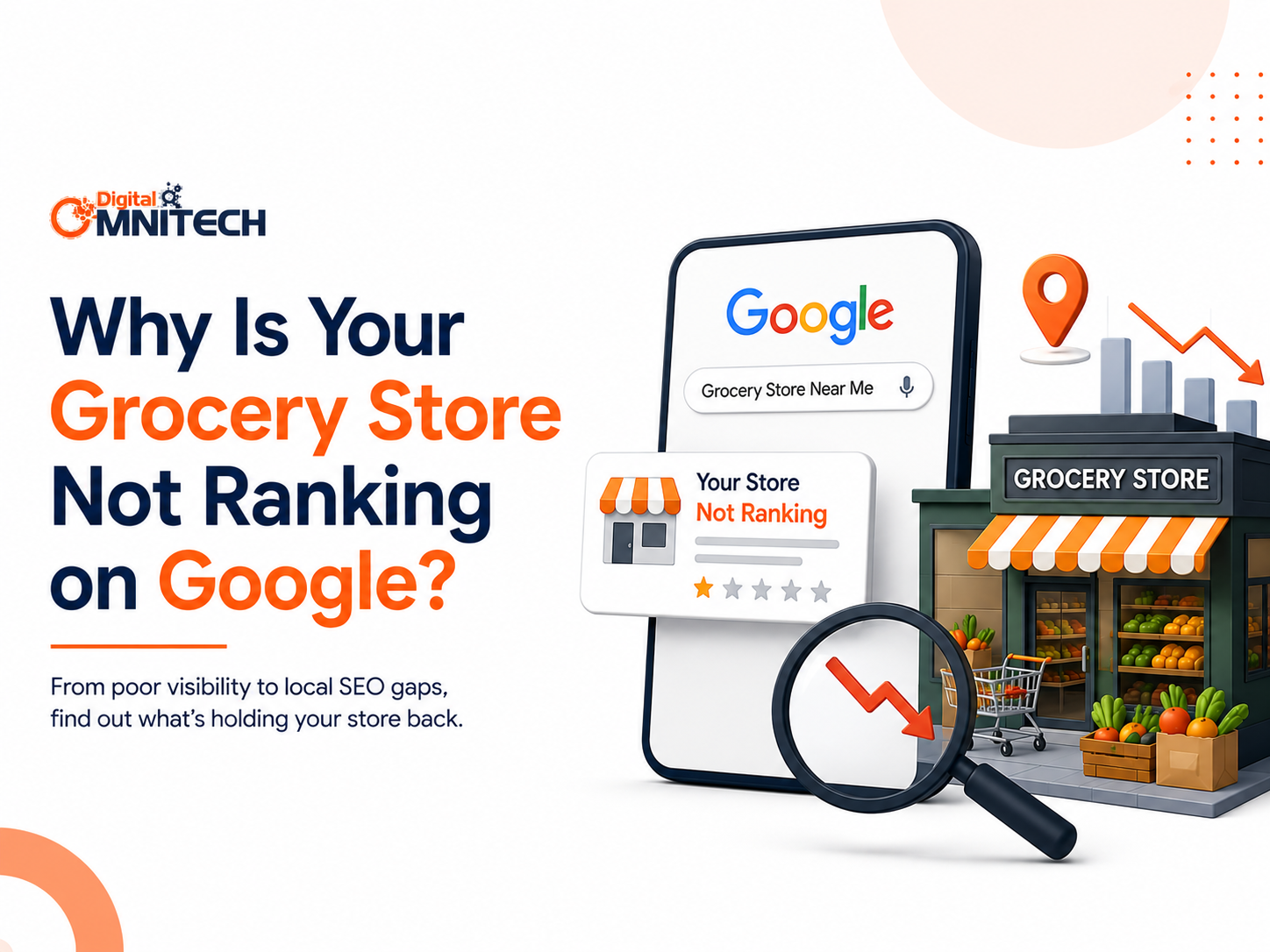
With more customers searching online before visiting a local grocery store, achieving visibility on Google has become essential for business growth. Consumers frequently search for grocery stores, supermarkets, fresh produce, daily essentials, and home delivery services in their local area.
If your grocery store is not appearing in relevant search results, you are likely missing valuable opportunities to attract nearby customers and increase sales. Poor search rankings are rarely caused by a single issue.
Instead, they are usually the result of multiple factors, including weak website optimization, poor local SEO, outdated content, technical problems, and increasing competition. Investing in Local SEO Services helps grocery stores improve their online visibility, attract qualified local customers, and build long-term digital growth.
Your Google Business Profile Is Not Fully Optimized
One of the biggest reasons grocery stores struggle to rank is an incomplete or poorly optimized Google Business Profile. Since local searches often display map listings before organic results, an inaccurate profile can significantly reduce visibility.
A properly optimized business profile should contain accurate contact information, updated business hours, relevant business categories, quality store images, customer reviews, and detailed service descriptions. Consistency across all online listings also helps improve local search performance.
Businesses that actively maintain their business profile are more likely to appear for location-based searches and attract nearby customers.
Your Website Lacks Local SEO Optimization
Local SEO is one of the most important ranking factors for grocery stores. Many businesses focus only on general website content while overlooking location-specific optimization.
Search engines prefer websites that clearly indicate where the business operates and which local customers it serves. Location-specific pages, locally relevant keywords, optimized meta titles, internal linking, and structured content all contribute to improved visibility in local search results.
Without strong local optimization, even a well-designed website may struggle to compete against nearby competitors.
Slow Website Performance
Website speed directly affects both user experience and search rankings. Customers expect websites to load quickly, especially when browsing products or searching for store information on mobile devices.
Large images, unnecessary scripts, outdated coding practices, and poor hosting can significantly reduce loading speed. Slow websites often experience higher bounce rates because visitors leave before pages fully load.
Improving website performance creates a better customer experience while supporting higher search rankings.
Poor Mobile Experience
Most grocery-related searches now originate from smartphones. Customers frequently search for nearby grocery stores while traveling, commuting, or shopping.
A website that performs poorly on mobile devices creates frustration for visitors and negatively affects search rankings. Responsive layouts, readable text, properly sized images, simple navigation, and fast-loading pages all contribute to a better mobile experience.
Mobile optimization has become an essential ranking factor rather than an optional feature.
Limited Website Content
Many grocery store websites contain only basic information such as contact details and product categories. While this may provide essential business information, it rarely offers enough value to improve search rankings.
Publishing informative content related to grocery shopping, healthy eating, seasonal produce, food storage, cooking ingredients, household essentials, and buying guides helps increase website authority.
High-quality content allows search engines to understand the website more effectively while providing additional opportunities to rank for relevant keywords.
Weak Keyword Strategy
Ranking on Google requires targeting keywords that customers actually search for. Many grocery store websites either target overly competitive keywords or fail to optimize content for relevant search intent.
Keyword research helps identify phrases with strong search demand and commercial value. Incorporating these keywords naturally throughout website pages improves search relevance without compromising readability.
An effective keyword strategy should align with customer behavior while supporting long-term organic growth.
Low-Quality Product Pages
If your grocery store offers online ordering, product pages play a major role in search visibility. Thin product descriptions, poor-quality images, duplicate content, and missing metadata reduce ranking potential.
Comprehensive product information, optimized images, descriptive titles, structured content, and internal linking improve both customer experience and search engine performance.
Well-optimized product pages also increase the likelihood of appearing in product-related searches.
Lack of Customer Reviews
Customer reviews influence both local rankings and purchasing decisions. Grocery stores with few reviews or outdated feedback often struggle to build credibility with both customers and search engines.
Encouraging satisfied customers to leave genuine reviews helps improve trust, visibility, and engagement. Responding professionally to customer feedback further demonstrates reliability and strengthens online reputation.
Positive reviews contribute significantly to local SEO performance.
Technical SEO Issues
Technical SEO problems frequently prevent websites from achieving their full ranking potential. Broken links, duplicate pages, missing meta descriptions, crawl errors, indexing issues, and incorrect redirects can all reduce search visibility.
Regular technical audits help identify and resolve these issues before they negatively affect rankings. Maintaining a technically healthy website allows search engines to crawl and index content more efficiently.
Technical optimization remains one of the most overlooked aspects of SEO.
Weak Internal Linking
Internal links help search engines understand website structure while guiding visitors toward important pages.
Many grocery store websites fail to connect related pages effectively, making navigation more difficult and reducing SEO performance.
Strategic internal linking distributes page authority across the website while improving user experience and encouraging visitors to explore additional content.
Increasing Local Competition
Competition within local search results continues to increase as more grocery businesses invest in digital marketing. Competitors that regularly update their websites, publish valuable content, optimize local listings, and improve customer engagement often achieve stronger rankings.
Maintaining consistent optimization efforts helps businesses remain competitive and continue attracting local customers.
Long-term SEO requires continuous improvement rather than one-time optimization.
Lack of Backlinks
Backlinks remain one of the strongest ranking signals for search engines. Websites that earn links from relevant, trustworthy sources generally achieve greater authority and improved visibility.
High-quality backlinks support long-term SEO growth while increasing website credibility.
Building authoritative links through valuable content and local partnerships strengthens overall search performance.
The Importance of a Long-Term SEO Strategy
Search engine optimization is not an overnight process. Sustainable rankings require continuous monitoring, regular content updates, technical improvements, keyword optimization, and local SEO enhancements.
Businesses that consistently invest in SEO generally experience stronger visibility, increased website traffic, improved customer engagement, and higher conversion rates over time.
Working with experienced professionals such as Digital OmniTech helps grocery stores implement customized optimization strategies that align with evolving search engine algorithms and customer behavior.
Through comprehensive SEO planning, technical optimization, local search improvements, and ongoing performance analysis, Digital OmniTech supports businesses in achieving sustainable online growth. With a strategic approach focused on measurable results, Digital OmniTech enables grocery stores to improve search rankings, attract more local customers, and strengthen their digital presence.
Conclusion
Poor Google rankings can significantly limit the growth potential of a grocery store, regardless of product quality or customer service.
Factors such as incomplete local optimization, slow website performance, weak content, technical SEO issues, limited customer reviews, and ineffective keyword targeting all contribute to reduced visibility.
Addressing these challenges through a structured SEO strategy improves search rankings, increases local traffic, and creates more opportunities for customer acquisition. Businesses that prioritize continuous optimization and invest in professional digital marketing are better positioned for long-term success in an increasingly competitive online marketplace.
Frequently Asked Questions
1. Why is my grocery store not appearing on Google?
Common reasons include poor local SEO, incomplete Google Business Profile, weak website optimization, technical issues, and strong local competition.
2. How does Local SEO help grocery stores?
Local SEO improves visibility in location-based searches, helping nearby customers find your grocery store more easily.
3. How long does it take to improve Google rankings?
SEO usually requires several months of consistent optimization before significant improvements become visible.
4. Do customer reviews affect Google rankings?
Yes. Genuine customer reviews improve credibility, strengthen local SEO, and increase trust among potential customers.
5. Why should grocery stores invest in professional SEO services?
Professional SEO improves website performance, local visibility, keyword optimization, technical health, and long-term organic traffic, resulting in sustainable business growth.