+91 95752 60218

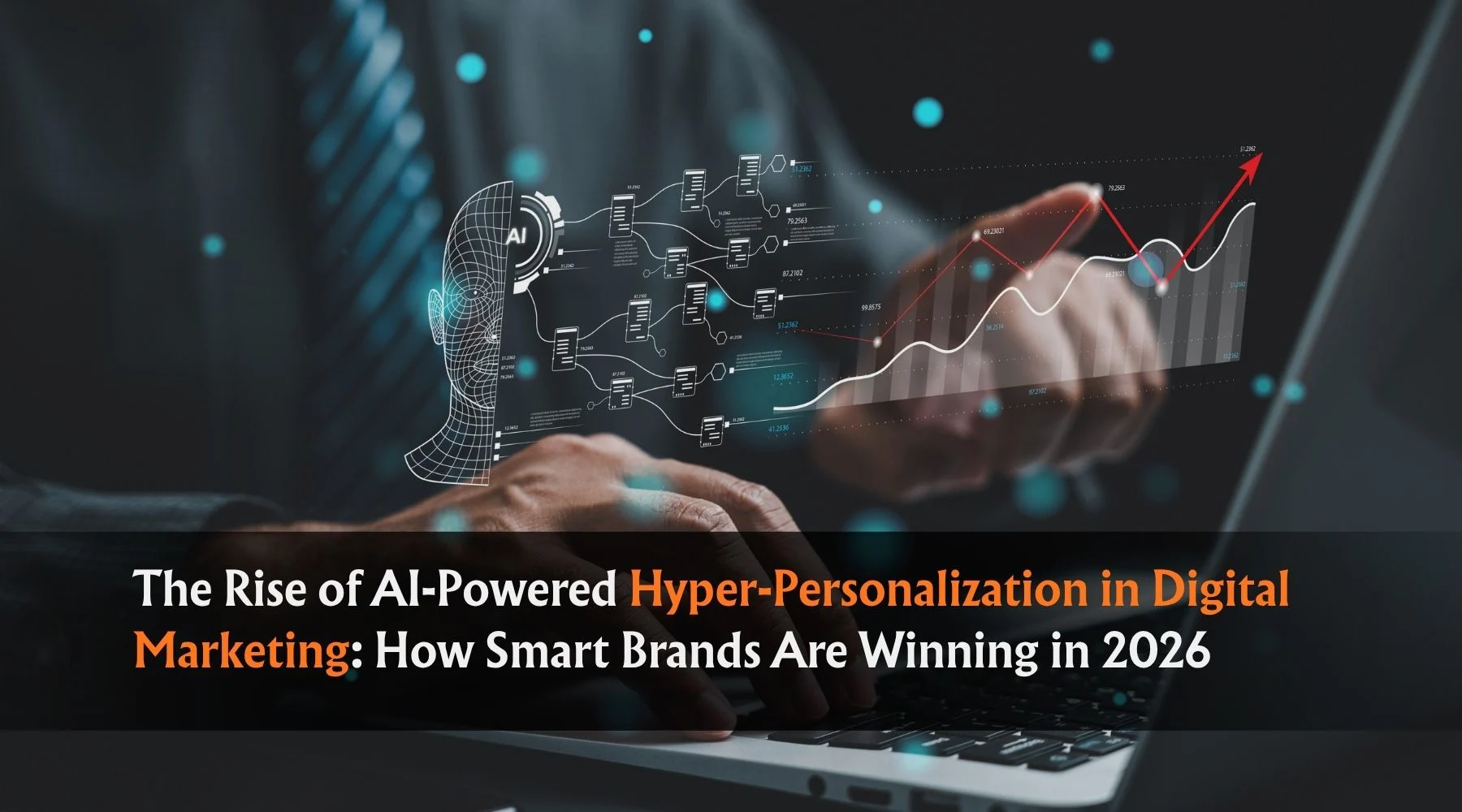
Table of Contents
- Why Hyper-Personalization Is Exploding Right Now
- Key Technologies Driving Hyper-Personalization in 2026
- Real-World Examples of Hyper-Personalization Success
- How to Implement Hyper-Personalization: A Practical Step-by-Step Guide
- The Essential Balance: AI Efficiency Meets Human Empathy
- Common Challenges and How to Overcome Them
- The Future Outlook for Personalized Marketing
- Ready to Transform Your Marketing Results?
- Frequently Asked Questions (FAQs)
- 1. What is the difference between personalization and hyper-personalization?
- 2. How long does it take to see results from hyper-personalization?
- 3. Is AI hyper-personalization safe and compliant with data privacy laws?
- 4. Which types of businesses benefit most from hyper-personalization?
- 5. Do I need a large budget or technical team to start hyper-personalization?
In today’s fast-paced digital world, consumers scroll through thousands of messages every single day. Most of them get ignored. But every once in a while, a brand delivers an experience that feels custom-made—just for you. That magic is happening at scale in 2026 through AI-powered hyper-personalization. It has moved from an experimental tactic to a core competitive advantage for forward-thinking businesses.
Hyper-personalization uses advanced artificial intelligence to deliver real-time, one-to-one experiences based on individual behavior, preferences, context, and even emotions. Unlike basic personalization that inserts a first name into an email, hyper-personalization creates dynamic journeys that evolve with each interaction. This shift is reshaping how brands connect with audiences and driving measurable growth in engagement, conversions, and loyalty.
Why Hyper-Personalization Is Exploding Right Now
Several powerful forces have converged to make 2026 the year of hyper-personalization. First, artificial intelligence and machine learning models have reached a level of maturity that allows instant processing of massive datasets. Predictive analytics can now anticipate customer needs before they even express them.
Second, the death of third-party cookies and stricter privacy regulations have forced marketers to rely on ethical first-party and zero-party data. Customers willingly share preferences through quizzes, surveys, preference centers, and interactive experiences when they receive clear value in return.
Third, consumer expectations have skyrocketed. Research consistently shows that people are far more likely to purchase from brands that understand them personally and offer relevant recommendations. They reward relevance and punish generic messaging with quick unfollows or cart abandonment.
The rise of omnichannel journeys further amplifies this trend. A customer might discover a product on Instagram, research it on a mobile website, ask questions via chat, and complete the purchase through WhatsApp or email. Hyper-personalization ensures every touchpoint tells one consistent, relevant story.
For businesses of all sizes—including local and regional players—this levels the playing field. You no longer need enormous advertising budgets to compete. You need smarter, more relevant connections that build trust and emotional loyalty.
Key Technologies Driving Hyper-Personalization in 2026
Several breakthrough technologies are making hyper-personalization practical and scalable:
- Generative AI creates customized copy, images, videos, and offers in real time.
- Predictive analytics forecasts future behavior based on historical patterns and current signals.
- Real-time decision engines adjust website content, ad creatives, and email messaging instantly.
- Sentiment analysis and emotion AI detect mood from browsing behavior, review language, or social interactions.
- Conversational AI agents power natural dialogues across chat, voice, and messaging apps.
- Visual recognition and recommendation engines analyze images, past purchases, and style preferences.
These tools work together to create seamless experiences that feel intuitive rather than intrusive.
Real-World Examples of Hyper-Personalization Success
Consider a fitness app that notices a user has missed several leg-day workouts. Instead of a generic motivational push, it sends a personalized workout plan focused on lower-body strength, featuring a short video from the trainer the user engages with most. The accompanying offer includes a discount on premium recovery supplements based on the user’s past purchase patterns. Engagement and conversion rates for such campaigns are significantly higher than standard promotions.
In fashion e-commerce, a brand uses visual search combined with calendar integration and local weather data to suggest complete outfits. A professional in Mumbai receives “Boardroom-ready looks for your 10 AM pitch” while someone in Bangalore gets weekend casual suggestions tailored to the forecast. These context-aware recommendations boost average order value dramatically.
Travel companies now personalize entire itineraries based on past trips, preferred activities, budget signals, and even current life events inferred from data. A couple celebrating an anniversary might receive hotel and experience packages that perfectly match their romance preferences and dining history.
Even B2B companies are benefiting. Software platforms deliver customized dashboards, learning paths, and feature recommendations based on each user’s role, industry, and usage patterns. This reduces churn and increases expansion revenue.
How to Implement Hyper-Personalization: A Practical Step-by-Step Guide
Getting started with hyper-personalization doesn’t require a massive in-house tech team. Follow this structured approach:
1. Build Strong Data Foundations
Audit all existing customer data sources. Focus on first-party data collected through website interactions, CRM systems, email sign-ups, and preference forms. Ensure full compliance with privacy laws and emphasize transparency. Customers appreciate knowing exactly how their information will be used to improve their experience.
2. Select the Right Technology Stack
Choose tools that match your business scale. Popular options include advanced marketing automation platforms with built-in AI, customer data platforms (CDPs), dynamic content engines, and recommendation systems. Integration with messaging channels like WhatsApp Business API has proven especially powerful for many Indian businesses.
3. Move Beyond Basic Segmentation
Traditional demographic segments (age, location, gender) are no longer enough. Develop behavioral and psychographic segments that consider purchase journey stage, engagement level, preferences, and intent signals. AI makes these segments dynamic and constantly evolving.
4. Create Dynamic Content Experiences
Implement systems that automatically adjust headlines, images, product recommendations, and calls-to-action in real time. Test multiple variations and let AI optimize performance continuously.
5. Design Seamless Omnichannel Journeys
Ensure consistency across devices and platforms. A customer who abandons a cart on mobile should see relevant follow-up messaging through their preferred channel with offers that match their exact interests.
6. Measure Performance with Advanced Metrics
Track personalization lift by comparing results between personalized and control groups. Focus on long-term metrics such as customer lifetime value, repeat purchase rate, retention, and net promoter score alongside immediate conversion rates.
The Essential Balance: AI Efficiency Meets Human Empathy
Technology alone cannot create lasting customer relationships. The most successful brands combine powerful AI capabilities with genuine human creativity and emotional intelligence. AI excels at scale, speed, and pattern recognition. Humans bring storytelling, cultural nuance, humor, and authentic connection.
Avoid the common mistake of over-automation. When every message feels robotic, customers disengage. Instead, use AI to handle routine tasks and data analysis while letting creative teams focus on crafting meaningful narratives and community-building initiatives.
User-generated content, authentic testimonials, behind-the-scenes stories, and human responses to customer feedback remain incredibly powerful even in an AI-driven landscape.
Common Challenges and How to Overcome Them
Despite its potential, hyper-personalization comes with hurdles. Many businesses worry about data privacy. The solution is radical transparency and clear value exchange. Always explain benefits and give customers easy control over their data preferences.
Another risk is the “creepy factor.” When personalization goes too far, it can feel invasive. Set smart boundaries, provide preference management tools, and allow users to adjust their personalization level.
Technical integration can also feel overwhelming. Start small. Pilot hyper-personalization in one channel—such as email marketing or website product recommendations—before expanding across the entire customer journey.
Skill gaps present another challenge. Many marketing teams understand strategy but need support implementing advanced AI tools. Partnering with experienced professionals can accelerate results while building internal capabilities over time.
The Future Outlook for Personalized Marketing
Looking ahead, hyper-personalization will become even more sophisticated. We can expect greater integration of augmented reality try-before-you-buy experiences, voice commerce personalization, and AI agents that act as personal shopping assistants across platforms.
Search engines are also evolving toward more conversational and personalized results. Brands that master customer understanding today will have a significant advantage in the AI search era.
Sustainability preferences, social values, and purpose-driven choices will increasingly factor into personalization algorithms. Customers will expect brands to understand not just what they want to buy, but why and how it aligns with their values.
Ready to Transform Your Marketing Results?
Hyper-personalization represents one of the biggest opportunities in digital marketing for 2026 and beyond. Brands that implement it thoughtfully will build deeper customer relationships, achieve higher returns on marketing investment, and create sustainable competitive advantages.
The transition requires strategy, the right tools, and a commitment to balancing technology with humanity. Businesses that act now will lead their industries, while those that delay risk falling behind in an increasingly personalized world.
Start by auditing your current customer data and identifying quick-win opportunities in one or two channels. Small, consistent improvements compound into remarkable results over time.
Digital OmniTech helps businesses implement effective personalization strategies that drive real growth. With deep expertise in both technology and customer psychology, we create marketing systems that feel as human as they are intelligent.
When you partner with Digital OmniTech, you gain a team dedicated to turning data into genuine customer relationships that last.
Digital OmniTech remains committed to delivering measurable results through smart, ethical personalization approaches.
The future of marketing is personal. Make sure your brand is ready to deliver it.
Related Blogs
Top Digital Marketing Trends Every Business Must Follow in 2026
AI Search Optimization (AISO): How to Rank in ChatGPT, Google SGE & AI-Driven Search in 2026
Frequently Asked Questions (FAQs)
1. What is the difference between personalization and hyper-personalization?
Personalization typically involves simple customizations like using a customer’s name or basic segmentation. Hyper-personalization goes much deeper by using real-time AI, behavioral data, contextual signals, and predictive analytics to create unique, dynamic experiences for each individual that evolve with every interaction.
2. How long does it take to see results from hyper-personalization?
Most businesses notice improvements in engagement and conversion rates within 4–8 weeks of implementation, especially in email, website recommendations, and paid ads. Significant lifts in customer lifetime value and retention usually appear after 3–6 months as the AI models learn and optimize.
3. Is AI hyper-personalization safe and compliant with data privacy laws?
Yes, when done correctly. It relies primarily on first-party and zero-party data with full transparency. Leading implementations include clear consent mechanisms, preference centers, and strict compliance with GDPR, CCPA, and India’s DPDP Act. Customers should always have control over their data.
4. Which types of businesses benefit most from hyper-personalization?
E-commerce, fashion, travel, fitness, SaaS, education, and local service businesses (restaurants, clinics, retailers) see the highest returns. Any brand with repeat purchase potential or complex customer journeys can benefit significantly from tailored experiences.
5. Do I need a large budget or technical team to start hyper-personalization?
Not necessarily. Many affordable tools and platforms offer AI features that small and medium businesses can use. Starting with one channel (like email or website personalization) keeps costs manageable. Partnering with experts can help accelerate results without building everything in-house.