+91 95752 60218

Social media in 2026 feels familiar on the surface—but the way people use it has changed a lot. Users are not just scrolling for entertainment anymore. They are searching, comparing, learning, and making decisions directly on these platforms.
That’s why many businesses feel stuck. They’re posting regularly, following trends, even trying different formats—but the results don’t match the effort.
The gap is not in activity. It’s in understanding how user behavior has shifted.
Let’s go through the trends that are actually shaping outcomes this year—and what they mean in a practical sense.
1. Short-Form Video Still Works—But Only When It Has a Clear Purpose
Short videos are everywhere, but not all of them perform. What’s changed is the expectation behind them.
Earlier, people were okay watching random, entertaining clips. Now, even short videos need to give something back—an idea, a solution, or a clear takeaway.
If your video doesn’t answer a question or solve a small problem, it gets skipped quickly.
This doesn’t mean you need high production. In fact, simple videos where you clearly explain something often perform better. What matters is clarity, not complexity.
Before creating any video, ask yourself:
Would someone actually learn something from this?
If the answer is yes, you’re already ahead of most content.
2. Social Platforms Are Now Search Platforms
One of the biggest shifts is how people discover content.
Instead of going to a search engine, users are typing their queries directly into social platforms. Whether it’s finding a service, learning a skill, or comparing options—everything is happening inside the app.
This means your content needs to be built around real questions.
If your posts are generic or only promotional, they won’t show up when people search. But if your content clearly talks about a specific topic in a natural way, it becomes discoverable over time.
This is also where combining your content efforts with SEO services becomes important. When your social content and search intent align, your visibility improves without relying entirely on paid reach.
3. People Connect More with Individuals Than Brands
You can have a strong brand identity, but if there’s no human presence, it becomes harder to build trust.
In 2026, people prefer to hear from real individuals—founders, team members, or anyone who can share genuine insights.
When someone speaks from experience, it feels more relatable. It builds confidence in a way that polished brand messaging often cannot.
You don’t need to overcomplicate this. Just start sharing what you already know—your experiences, your learnings, even your challenges.
If you’re unsure how to position this properly, working with a digital marketing agency can help you structure your personal and brand communication in a way that feels natural but still drives results.
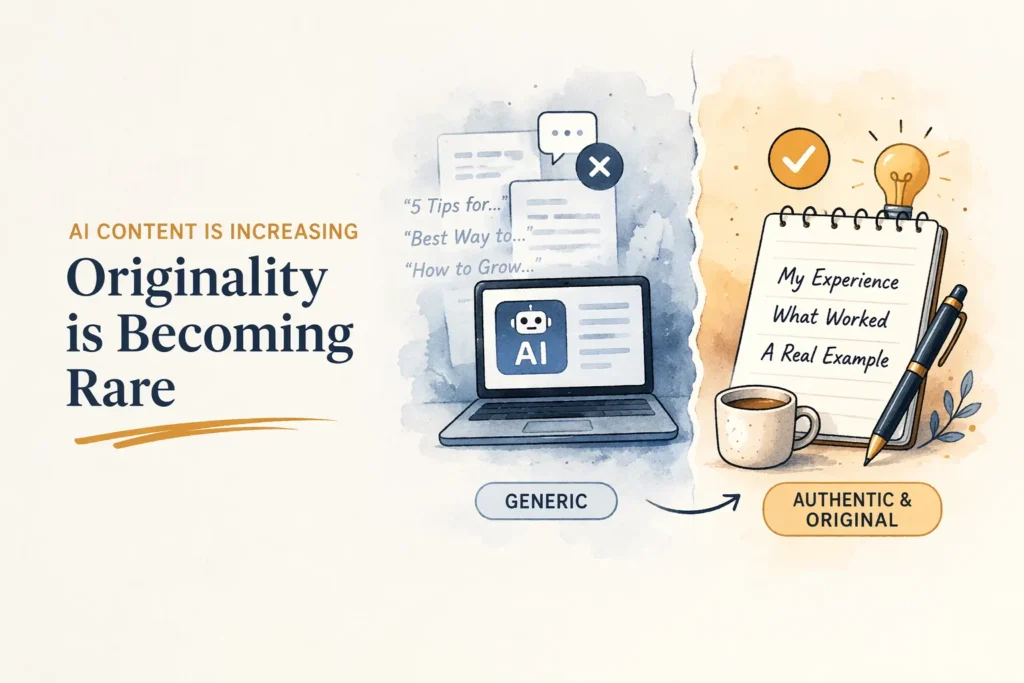
4. AI Content is Increasing—But Originality is Becoming Rare
There’s no doubt that AI has made content creation faster. But it has also made a lot of content feel the same.
Users are now seeing similar formats, similar lines, and similar ideas repeated across platforms. As a result, generic content is getting ignored more quickly.
What still stands out is perspective.
When you add your own thinking, your own examples, or even a simple real-life observation, your content becomes more engaging.
AI can help you start—but it can’t replace your experience.
The content that performs well now is not the most polished—it’s the most genuine.
5. Engagement is Becoming More Meaningful Than Reach
High views can feel good, but they don’t always translate into business.
A post with fewer views but real conversations—comments, messages, inquiries—is far more valuable.
That’s because engagement shows intent.
When people take time to respond, ask questions, or share your content, they’re showing interest. And interest is what eventually leads to action.
This is why your focus should slowly shift from “getting more reach” to “creating better interaction.”
Ask simple questions. Share relatable thoughts. Give people a reason to respond.
Over time, this builds a stronger connection with your audience.
6. Organic Growth Alone is Not Enough Anymore
If you rely only on organic reach, your growth will always feel unpredictable. Some posts will perform well, others won’t—even if the quality is consistent.
This is where a balanced approach works better.
Businesses that are growing steadily are not guessing. They are observing what works organically and then supporting it with paid promotion.
Instead of running ads randomly, they focus on content that already shows potential.
This is where structured social media marketing services can help—by tracking performance, identifying what’s working, and scaling it in a controlled way.
Also, most people don’t take action the first time they see your content. They need to see you multiple times before making a decision.
Staying visible—through both organic and paid efforts—makes a big difference.
Final Thought
Social media in 2026 is not about doing more—it’s about doing things with more clarity.
You don’t need to be everywhere. You don’t need to follow every trend.
What you need is a better understanding of how people are thinking, searching, and interacting.
If your content feels real, solves small problems, and speaks in a clear, human way—you’re already building something strong.
And over time, that consistency turns into trust.
And trust is what ultimately drives growth.