+91 95752 60218

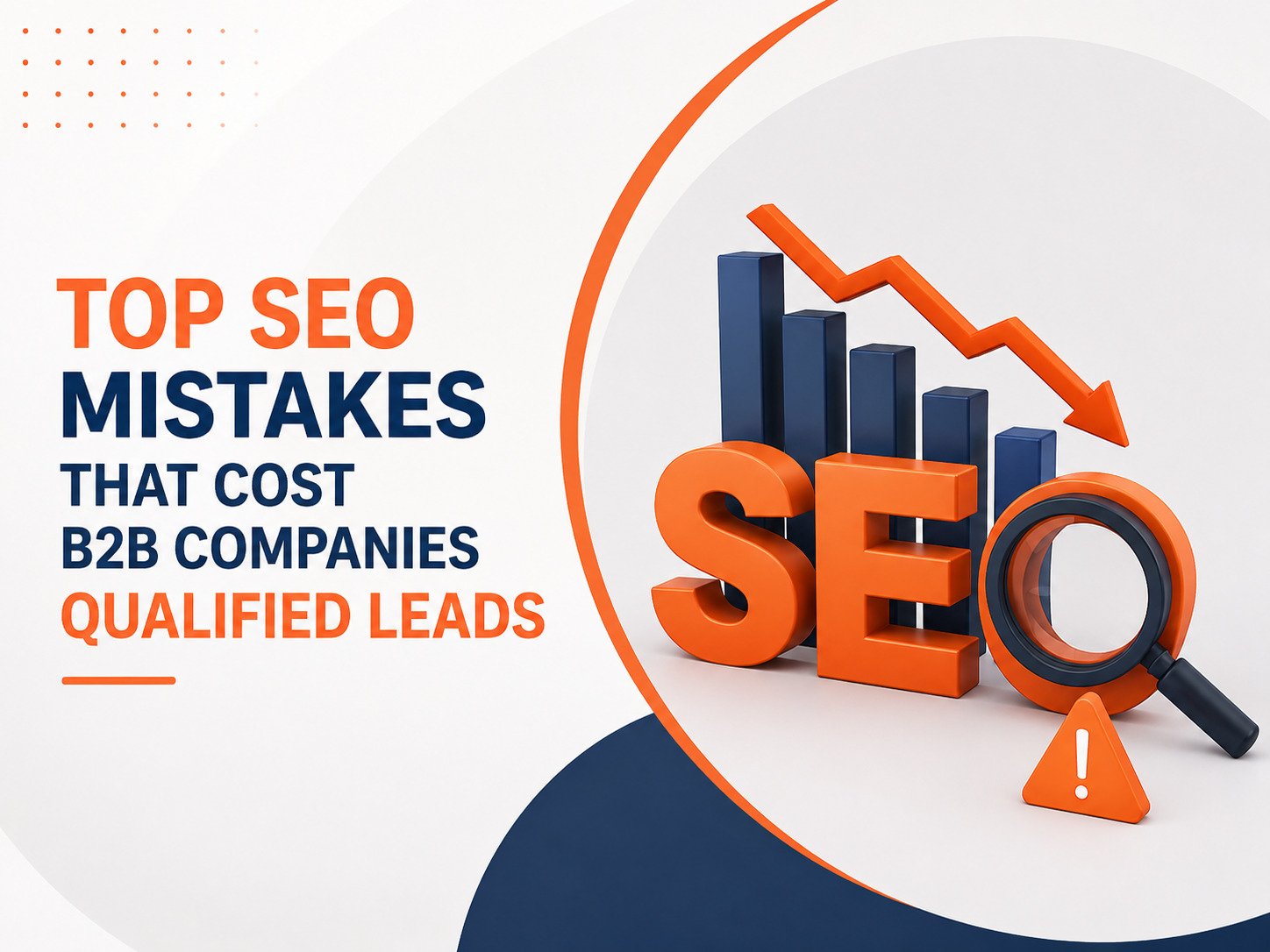
B2B companies often invest heavily in SEO to attract more website visitors, but traffic alone does not guarantee business growth. A website can receive thousands of monthly visits and still generate very few qualified leads if its SEO strategy is focused on the wrong keywords, weak content, poor technical performance, or mismatched search intent.
The real objective of B2B SEO is to attract prospects who have a genuine business need and are moving toward a purchasing decision. Many B2B businesses make the mistake of chasing high-volume keywords instead of focusing on commercial and buyer-focused searches. Others publish generic AI-generated content, ignore bottom-of-funnel pages, or fail to connect their SEO strategy with sales requirements.
Digital OmniTech helps businesses build a more focused approach by aligning search visibility with business goals, buyer intent, and conversion opportunities. A strong foundation of On Page SEO Services can further help B2B websites improve relevance, structure important pages, and attract more qualified search traffic.
1. Targeting High-Volume Keywords Instead of Buyer Intent
One of the biggest SEO mistakes B2B companies make is selecting keywords based primarily on search volume. A keyword with thousands of monthly searches may look attractive, but the people searching for it may not be potential customers. For example, a B2B technology company may rank for broad informational searches that attract students, researchers, or early-stage readers.
This can increase organic traffic without producing meaningful enquiries. A better approach is to identify keywords that reflect commercial intent. Searches containing terms such as “services,” “pricing,” “provider,” “agency,” “company,” “solution,” “comparison,” and “expert” often indicate stronger buying intent. B2B SEO should therefore focus on qualified traffic rather than maximum traffic. A smaller number of visitors with strong purchase intent can be significantly more valuable than thousands of irrelevant sessions.
2. Ignoring Bottom-of-Funnel Search Queries
Many businesses create educational blogs but neglect pages that support prospects close to making a decision. This creates an SEO funnel that attracts people at the awareness stage but provides limited content for users evaluating vendors. Bottom-of-funnel content can include service pages, solution pages, comparison articles, pricing-related content, case studies, alternatives, use-case pages, and industry-specific landing pages.
These pages answer questions prospects often have immediately before contacting a provider. A company offering B2B website solutions, for instance, should not rely only on articles about website trends. It should also create pages addressing specific commercial requirements such as affordable B2B website development, industry solutions, technical capabilities, and project outcomes.
3. Publishing Generic AI Content Without Expertise
AI can accelerate content production, but publishing generic content without expert review can weaken a B2B website. Decision-makers want useful information that demonstrates actual knowledge rather than another rewritten version of information already available online. Generic content often lacks original examples, practical recommendations, industry-specific insights, data, and clear opinions.
It may also fail to address the real objections and questions customers raise during the sales process. AI should support research, structuring, and content development, but businesses should add genuine expertise and first-hand knowledge. Strong B2B content should explain not only what something is but also how it affects businesses, what mistakes to avoid, and what factors should influence a purchasing decision.
4. Not Aligning SEO With Sales Teams
SEO teams and sales teams often work separately, which can result in missed opportunities. Sales representatives regularly hear questions from prospects about pricing, implementation, integrations, timelines, technical requirements, and expected results. Those questions are valuable SEO insights.
Companies should use sales conversations, customer objections, support queries, and frequently asked questions to identify content opportunities. When SEO addresses the exact questions prospects ask before purchasing, the resulting traffic is more likely to convert. This alignment also helps businesses develop pages that support the complete buyer journey instead of producing content simply because a keyword has search volume.
5. Weak Internal Linking
A blog post can attract an interested prospect, but the opportunity may be lost if the page does not guide the visitor toward a relevant service or solution. Internal linking creates connections between informational and commercial pages. For example, an article discussing B2B website challenges can naturally link to a website development service page.
Similarly, educational SEO content can direct readers toward on page seo services in indore when the subject is relevant. Internal links should be descriptive, logical, and useful to readers. They help search engines understand the relationship between pages while also making it easier for users to discover relevant services.
6. Neglecting Technical SEO
Even excellent content can struggle when a website has technical problems. Slow-loading pages, broken links, poor mobile usability, crawl issues, incorrect canonical tags, duplicate content, weak site architecture, and indexing problems can reduce search performance and create a poor user experience. B2B websites should regularly monitor their technical health and address issues that prevent search engines from efficiently crawling and understanding important pages.
For businesses operating in competitive markets, working with a technical seo expert can help identify structural issues that are not always visible through basic SEO checks. Technical SEO should not be treated as a one-time activity. Websites change constantly as new pages, plugins, redirects, tracking systems, and technical updates are introduced.
7. Creating Content Without Topical Authority
Publishing unrelated blog posts around random keywords rarely creates a strong SEO foundation. B2B companies should build topical authority by developing connected content around important products, services, industries, and customer problems.
For example, a digital marketing company can create interconnected content around SEO, content marketing, paid advertising, technical SEO, local search, analytics, and AI-driven search experiences. Instead of producing isolated articles, businesses should build topic clusters that demonstrate depth and connect supporting content to important commercial pages. Digital OmniTech can use this approach to create stronger relationships between educational content and service-focused pages.
8. Ignoring Local Search Opportunities
B2B businesses serving a specific region should not overlook local SEO. A company operating in Madhya Pradesh, for example, can benefit from strategically targeting searches related to best SEO services in Indore when those searches accurately represent its offering and market.
Local landing pages should provide genuine information about services, expertise, industries served, and customer needs rather than simply repeating a city name throughout the page. Google Business Profile optimization, consistent business information, relevant local content, reviews, and location-focused service pages can collectively strengthen local visibility.
9. Treating AI Search as Separate From SEO
Search behaviour is changing as AI-powered search experiences become more prominent. Businesses that only optimise for traditional blue-link rankings may miss opportunities to become visible in AI-generated answers and summaries. seo for AI search engines requires clear information architecture, useful and trustworthy content, strong topical coverage, direct answers, structured information, and demonstrable expertise.
Businesses should make it easy for search systems to understand what they offer, who they serve, and why their expertise is relevant. The goal is not to abandon traditional SEO. Instead, businesses should build content that works across conventional search and emerging AI-driven discovery environments.
10. Measuring Traffic Instead of Qualified Leads
Another major mistake is judging SEO success only through impressions, rankings, sessions, or total organic traffic. These metrics matter, but they do not necessarily indicate business performance. B2B companies should track metrics such as qualified enquiries, demo requests, consultation requests, lead quality, conversion rates, assisted conversions, and revenue influenced by organic search.
A page receiving fewer visitors but generating several high-value leads can be more commercially successful than a high-traffic blog that produces no enquiries. Digital OmniTech can help businesses take a more commercially focused approach to SEO and digital marketing, where search visibility is connected to lead generation and business outcomes rather than vanity metrics.
How B2B Companies Can Avoid These SEO Mistakes
The solution is not simply publishing more content or targeting more keywords. B2B companies need a structured SEO strategy built around search intent, buyer journeys, technical performance, topical authority, and conversion opportunities. Start by auditing existing keywords and identifying whether they attract decision-makers or general audiences.
Review commercial pages and determine whether prospects can easily understand the service, value proposition, expertise, and next step. Strengthen internal linking, resolve technical SEO problems, and build content around genuine customer questions. Businesses should also evaluate their visibility across traditional search and emerging AI-driven search experiences. A well-structured strategy can combine local SEO, technical optimisation, high-intent content, and digital marketing services to create a stronger acquisition system.
Conclusion
B2B companies do not lose qualified leads because they lack traffic alone. They lose opportunities when SEO attracts the wrong audience, ignores buyer intent, publishes weak content, leaves technical problems unresolved, or fails to connect visitors with relevant commercial pages.
The strongest B2B SEO strategy focuses on the entire customer journey, from the first search to the final enquiry. By targeting high-intent keywords, creating useful bottom-of-funnel content, strengthening technical foundations, building topical authority, and preparing for AI-powered search, businesses can turn organic visibility into a more reliable source of qualified leads.
FAQs
1. What is the biggest SEO mistake B2B companies make?
One of the biggest mistakes is focusing on high-volume keywords and overall traffic instead of search intent and qualified leads. B2B companies should prioritise keywords and content that attract prospects with genuine commercial needs.
2. Why is bottom-of-funnel SEO important for B2B businesses?
Bottom-of-funnel SEO targets prospects who are actively comparing solutions or preparing to make a purchase. Service pages, comparison content, use cases, pricing information, and solution-focused landing pages can help convert these high-intent visitors.
3. How does technical SEO affect B2B lead generation?
Technical issues such as slow loading, broken links, indexing problems, poor mobile usability, and weak site architecture can reduce search visibility and create friction for users. Fixing these issues can improve both discoverability and user experience.
4. Should B2B companies use AI to create SEO content?
AI can assist with research, outlining, and content production, but businesses should add expert insights, original examples, accurate information, and real customer knowledge. Generic AI content without meaningful expertise is unlikely to create strong differentiation.
5. How can B2B companies prepare for AI search?
Businesses should create clear, authoritative, well-structured content that directly answers user questions and demonstrates expertise. Optimising for seo for ai search engines should complement, rather than replace, traditional SEO practices.