+91 95752 60218

The growth of online shopping has completely transformed the way businesses connect with customers. Today, having an e-commerce website is no longer enough to achieve consistent sales growth. With thousands of online stores competing for customer attention, businesses need a strong digital presence that helps their products appear in front of the right audience at the right time.
Search engines play a major role in how customers discover products online. When potential buyers search for products, they usually prefer websites that appear on the first page of search results. This makes search engine optimization an essential strategy for e-commerce businesses looking to increase visibility, attract qualified visitors, and generate more sales.
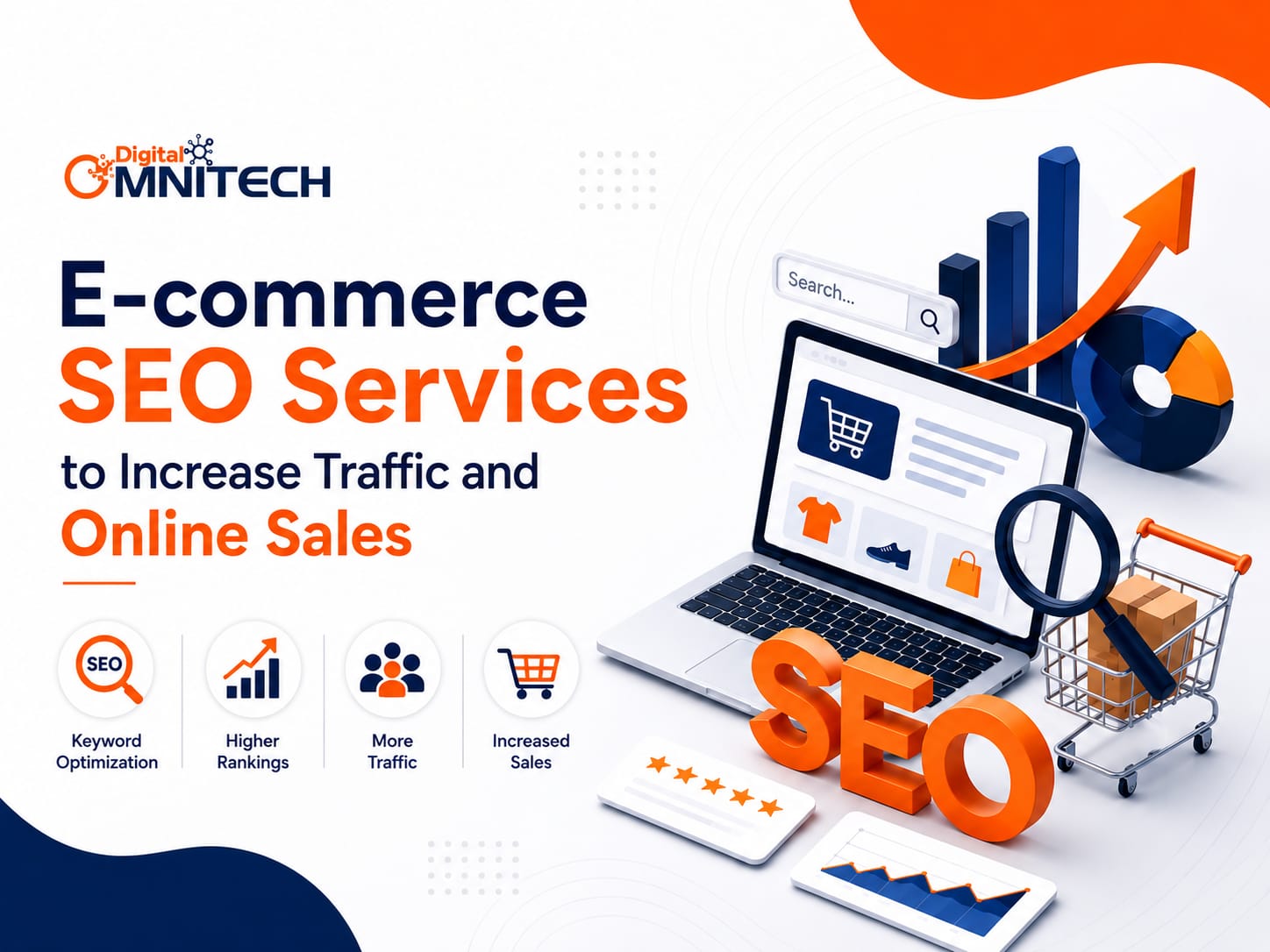
E-commerce SEO services focus on optimizing online stores to improve search rankings, enhance user experience, and increase organic traffic. Unlike traditional SEO, e-commerce SEO requires specialized strategies that consider product pages, category structures, customer search behavior, website performance, and purchasing intent.
Understanding the Importance of E-commerce SEO
Online customers rarely visit a website randomly. Most users begin their buying journey by searching for specific products, solutions, or information. If an online store does not appear during these searches, it loses valuable opportunities to competitors.
E-commerce SEO helps businesses improve their online visibility by optimizing different elements of their website. From product descriptions and keywords to technical performance and user experience, every aspect contributes to better search engine rankings.
A successful SEO strategy does not focus only on increasing visitors. It aims to attract customers who are genuinely interested in purchasing products. Quality traffic has a higher possibility of converting into sales, making SEO one of the most valuable investments for online businesses.
Optimizing Product Pages for Better Rankings
Product pages are the most important assets of any e-commerce website. These pages directly influence customer decisions and search engine understanding.
Effective optimization includes creating detailed product descriptions, using relevant keywords, improving images, optimizing page titles, and adding useful information that answers customer questions.
A well-optimized product page helps search engines understand what the product offers while providing customers with the information they need before making a purchase decision.
Poorly optimized product pages often struggle to rank because they lack valuable content and clear information. Businesses that invest in professional optimization can improve visibility while creating a better shopping experience.
Improving Website Structure and User Experience
A well-organized website structure makes it easier for both search engines and customers to navigate an online store. Categories, subcategories, product pages, and internal links should follow a logical structure.
A complicated website layout can increase bounce rates and make it difficult for customers to find products. On the other hand, a simple and user-friendly structure encourages visitors to explore more pages and complete purchases.
User experience has become an important ranking factor because search engines prioritize websites that provide valuable experiences. Fast loading speed, mobile responsiveness, easy navigation, and secure browsing all contribute to better performance.
Businesses working with SEO services for businesses can improve these technical and structural elements to create a stronger foundation for long-term growth.
Keyword Research Based on Customer Intent
Successful e-commerce SEO begins with understanding what customers are searching for. Keyword research helps identify the phrases potential buyers use while looking for products online.
Instead of focusing only on high-volume keywords, businesses should target search terms that reflect buying intent. Keywords related to specific products, features, categories, and solutions often attract users who are closer to making a purchase.
For example, customers searching for detailed product-specific terms usually have stronger purchase intent compared to users searching for general information.
Strategic keyword placement throughout product pages, category pages, blogs, and website content helps improve search visibility while connecting businesses with their target audience.
Technical SEO for E-commerce Websites
Technical performance directly affects how search engines crawl, understand, and rank an online store. Even websites with excellent products can struggle if technical issues prevent proper indexing.
Important technical SEO factors include website speed, mobile optimization, URL structure, sitemap management, broken link fixing, schema implementation, and secure website performance.
Large e-commerce websites often contain hundreds or thousands of product pages, making technical optimization even more important. A strong technical foundation ensures search engines can efficiently discover and rank website content.
Building High-Quality Content for Online Stores
Content plays a major role in attracting customers and improving search visibility. While product pages are essential, additional content such as buying guides, product comparisons, FAQs, and informative blogs helps answer customer questions.
High-quality content builds trust and encourages users to spend more time on the website. It also creates opportunities to target additional keywords related to products and customer concerns.
A complete digital growth strategy often combines SEO with other channels such as digital marketing services to maximize online visibility and customer engagement.
Improving Conversion Rates Through SEO
Driving traffic is only one part of e-commerce growth. The ultimate goal is converting visitors into paying customers.
SEO strategies should work together with conversion-focused improvements such as clear product information, simple checkout processes, customer reviews, attractive calls-to-action, and improved website usability.
When visitors can easily find products, understand benefits, and complete purchases without difficulty, conversion rates improve naturally.
This is why businesses increasingly focus on combining SEO with conversion rate optimization strategies to maximize the value of every website visitor.
Role of Email Marketing in E-commerce Growth
While SEO helps businesses attract new visitors, retaining existing customers is equally important for long-term success. Email marketing allows e-commerce businesses to stay connected with customers, share product updates, promote offers, and encourage repeat purchases.
A professional email marketing agency helps businesses create targeted campaigns based on customer behavior, interests, and purchasing patterns. Personalized emails, abandoned cart reminders, product recommendations, and customer retention campaigns can significantly improve engagement and revenue opportunities.
When SEO and email marketing work together, businesses can attract new customers through organic search while maintaining relationships with existing buyers. This combination creates a balanced digital growth strategy that supports continuous sales improvement.
Importance of Local and Global SEO Strategies
Depending on the business model, e-commerce stores may target customers from specific locations or operate across multiple regions. SEO strategies should be customized according to the target audience and business objectives.
Local SEO helps businesses improve visibility among customers searching for products within a particular area. Optimizing location-based keywords, business information, and regional content can improve local discovery.
For businesses targeting wider markets, global SEO focuses on reaching customers across different locations through effective keyword targeting, website optimization, and content strategies.
A customized approach ensures that businesses attract relevant audiences instead of focusing only on increasing website traffic numbers.
Building Trust Through Better Online Visibility
Customer trust plays a major role in online purchasing decisions. Search rankings, website quality, content accuracy, and user experience all influence how customers perceive an online store.
Websites that consistently appear in search results often gain higher credibility among users. Helpful content, transparent product information, secure browsing, and smooth navigation encourage customers to feel more confident while making purchases.
A strong SEO strategy helps businesses establish authority within their industry by improving visibility and delivering valuable information throughout the customer journey.
Choosing the Right E-commerce SEO Approach
Every online store has different goals, products, competitors, and target audiences. A successful SEO strategy requires understanding these factors and creating customized solutions rather than applying the same approach to every business.
Professional optimization includes detailed website analysis, competitor research, keyword planning, content improvement, technical enhancements, and continuous performance monitoring.
Digital OmniTech focuses on developing effective strategies that help e-commerce businesses improve online visibility, attract relevant customers, and build sustainable growth through search optimization.
Long-Term Benefits of E-commerce SEO
Unlike paid advertising campaigns that stop generating results once the budget ends, SEO creates long-term value by improving the website’s organic presence. A properly optimized online store can continue attracting customers through search engines over time.
Consistent SEO efforts help businesses achieve:
Improved search engine visibility
Higher-quality website traffic
Better customer engagement
Increased brand credibility
Greater opportunities for online sales
E-commerce growth requires continuous improvement because search trends, customer behavior, and competition keep changing. Businesses that invest in ongoing optimization are better positioned to maintain strong online performance.
Conclusion
The success of an e-commerce business depends on more than having quality products. Strong visibility, smooth user experience, valuable content, and effective customer engagement strategies are essential for generating consistent online sales.
E-commerce SEO services provide businesses with the opportunity to improve search rankings, attract qualified customers, and create a reliable source of organic growth. When combined with strategies like content marketing, email campaigns, and conversion optimization, SEO becomes a powerful tool for building long-term success.
FAQs
1. What are e-commerce SEO services?
E-commerce SEO services focus on optimizing online stores to improve search rankings, increase organic traffic, enhance user experience, and generate more sales through search engines.
2. Why is SEO important for online stores?
SEO helps online stores become more visible to potential customers who are actively searching for products, resulting in better-quality traffic and increased sales opportunities.
3. How does an email marketing agency help e-commerce businesses?
An email marketing agency helps businesses create targeted campaigns, improve customer engagement, recover abandoned carts, and encourage repeat purchases through personalized communication.
4. How long does e-commerce SEO take to show results?
SEO results depend on factors such as competition, website condition, industry, and optimization efforts. Consistent improvements generally lead to stronger results over time.
5. Can SEO improve online sales without paid advertising?
Yes, effective SEO strategies can increase organic visibility and attract potential customers without relying completely on paid advertising. Long-term optimization helps create sustainable traffic and sales growth.