+91 95752 60218

Introduction: The Shift from Traffic to Conversion
For years, digital marketing has been focused on one core goal—getting more traffic. But in 2026, that approach alone is no longer enough. Businesses are generating clicks, impressions, and visits, yet struggling to convert those users into paying customers.
The reason is simple. Users today expect relevance. They don’t want to browse endlessly or figure things out on their own. They expect brands to understand their needs instantly.
This is where AI personalization is transforming the game.
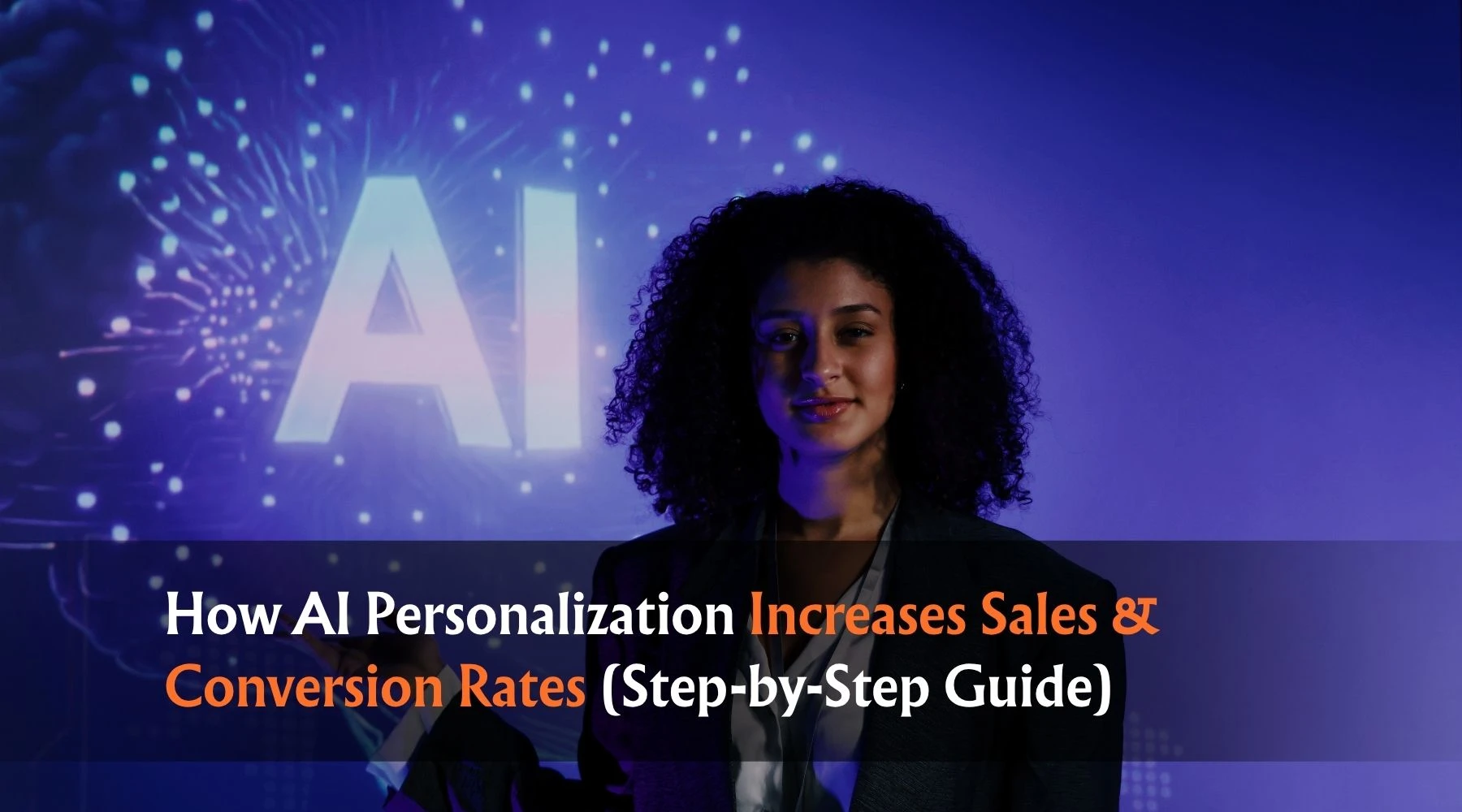
Instead of treating every visitor the same, AI allows businesses to create tailored experiences that align with user behavior, intent, and preferences. The result is not just better engagement—but measurable growth in sales and conversions.
Understanding AI Personalization in Modern Marketing
AI personalization is the process of using machine learning and behavioral data to deliver customized experiences to users in real time. It goes beyond basic segmentation and allows businesses to adapt content dynamically based on how users interact with their platform.
For example, a first-time visitor landing on your website will see a completely different experience compared to a returning user who has already explored your services.
This shift is closely connected to conversion rate optimization, where the goal is not just to attract visitors but to guide them toward taking meaningful actions.
In modern digital marketing strategies, personalization is no longer optional — it is a core driver of performance.
Why Personalization Directly Impacts Conversion Rates
The impact of AI personalization is not theoretical. It directly addresses the biggest barriers to conversion.
One of the primary reasons users do not convert is decision fatigue. When presented with too many choices or irrelevant content, users disengage quickly. AI solves this by filtering content and presenting only what is most relevant.
Another key factor is timing. Many marketing efforts fail not because the offer is wrong, but because it is shown at the wrong moment. AI tracks user behavior and identifies when a user is most likely to convert, allowing businesses to act at the right time.
There is also the element of trust. When users see content that aligns with their needs, they are more likely to perceive the brand as reliable. Over time, this builds credibility and supports long-term growth through brand building strategies.
How AI Personalization Increases Sales
The connection between personalization and revenue becomes clearer when you look at how users interact with personalized experiences.
When users are shown products or services that match their interests, they are more likely to explore further. This naturally increases engagement and improves the chances of conversion.
AI also enhances upselling and cross-selling opportunities. Instead of pushing random suggestions, it recommends products based on actual user behavior. This approach feels less intrusive and more helpful, which leads to higher acceptance.
In industries like e-commerce, this strategy plays a major role in increasing average order value. It aligns perfectly with advanced e-commerce marketing techniques that focus on maximizing revenue per customer.
Additionally, personalized experiences reduce drop-offs during the buying journey. When users feel guided rather than overwhelmed, they move faster toward making a purchase decision.
Step-by-Step Guide to Implement AI Personalization
Step 1: Build a Strong Data Foundation
The effectiveness of AI personalization depends entirely on the quality of data. Businesses need to start by collecting meaningful user data, including browsing behavior, interaction patterns, and purchase history.
This is where data-driven marketing becomes critical. Without accurate data, personalization efforts will lack precision and fail to deliver results.
Step 2: Understand User Intent
Not all visitors have the same intent. Some are exploring, while others are ready to buy.
AI helps in identifying these intent signals by analyzing user actions. For example, a user visiting pricing pages multiple times shows higher purchase intent compared to someone reading informational content.
Understanding this difference allows businesses to tailor their messaging accordingly, which significantly improves conversion rates.
Step 3: Personalize High-Impact Touchpoints
Instead of applying personalization across every element, focus on areas that directly influence conversions.
Landing pages, product pages, and checkout processes are the most critical. Personalizing these areas ensures that users receive relevant information at key decision-making moments.
When combined with performance marketing campaigns, this approach delivers stronger ROI and better campaign efficiency.
Step 4: Integrate AI Tools and Automation
Once the foundation is in place, businesses can start using AI-powered tools to automate personalization.
This includes recommendation engines, automated email workflows, and intelligent chat systems. These tools help scale personalization without increasing manual effort.
At this stage, integrating marketing automation services ensures consistency and efficiency across all channels.
Step 5: Continuously Optimize and Improve
AI personalization is not a one-time setup. It requires continuous monitoring and optimization.
By analyzing user responses and conversion data, businesses can refine their strategies over time. This ongoing improvement is what separates average campaigns from high-performing ones.
Common Challenges and How to Overcome Them
Despite its benefits, many businesses struggle with AI personalization due to poor implementation.
One common issue is over-personalization. When personalization becomes too aggressive, it can make users uncomfortable. The key is to keep it subtle and helpful.
Another challenge is relying on incomplete data. AI systems are only as good as the data they receive. Ensuring data accuracy is essential for success.
There is also a tendency to focus only on desktop experiences while ignoring mobile users. Given the dominance of mobile traffic, this can significantly impact results.
The Future of AI Personalization
AI personalization is evolving rapidly. The next phase will focus on predictive experiences, where systems anticipate user needs even before they are expressed.
Voice search, conversational interfaces, and real-time behavioral analysis will further enhance personalization capabilities.
Businesses that invest in these technologies early will gain a significant competitive advantage.
Conclusion: Turning Personalization into Profit
AI personalization is not just about improving user experience — it is about driving real business results.
By delivering relevant content, reducing friction, and guiding users through their journey, businesses can significantly increase both sales and conversion rates.
The shift is clear. Marketing is no longer about broadcasting messages. It is about creating meaningful, personalized interactions that lead to action.
Ready to Improve Your Conversion Rates?
If you want to implement strategies that go beyond traditional marketing, it’s time to explore smarter solutions.
Discover how our digital marketing services can help you leverage AI personalization to drive higher conversions, better engagement, and sustainable growth.
Connect with us today and start transforming your marketing performance.