+91 95752 60218

Choosing the right ecommerce platform is one of the most important decisions when building an online store. The platform affects website management, customization, security, performance, Ecommerce seo, content marketing, and long-term scalability.
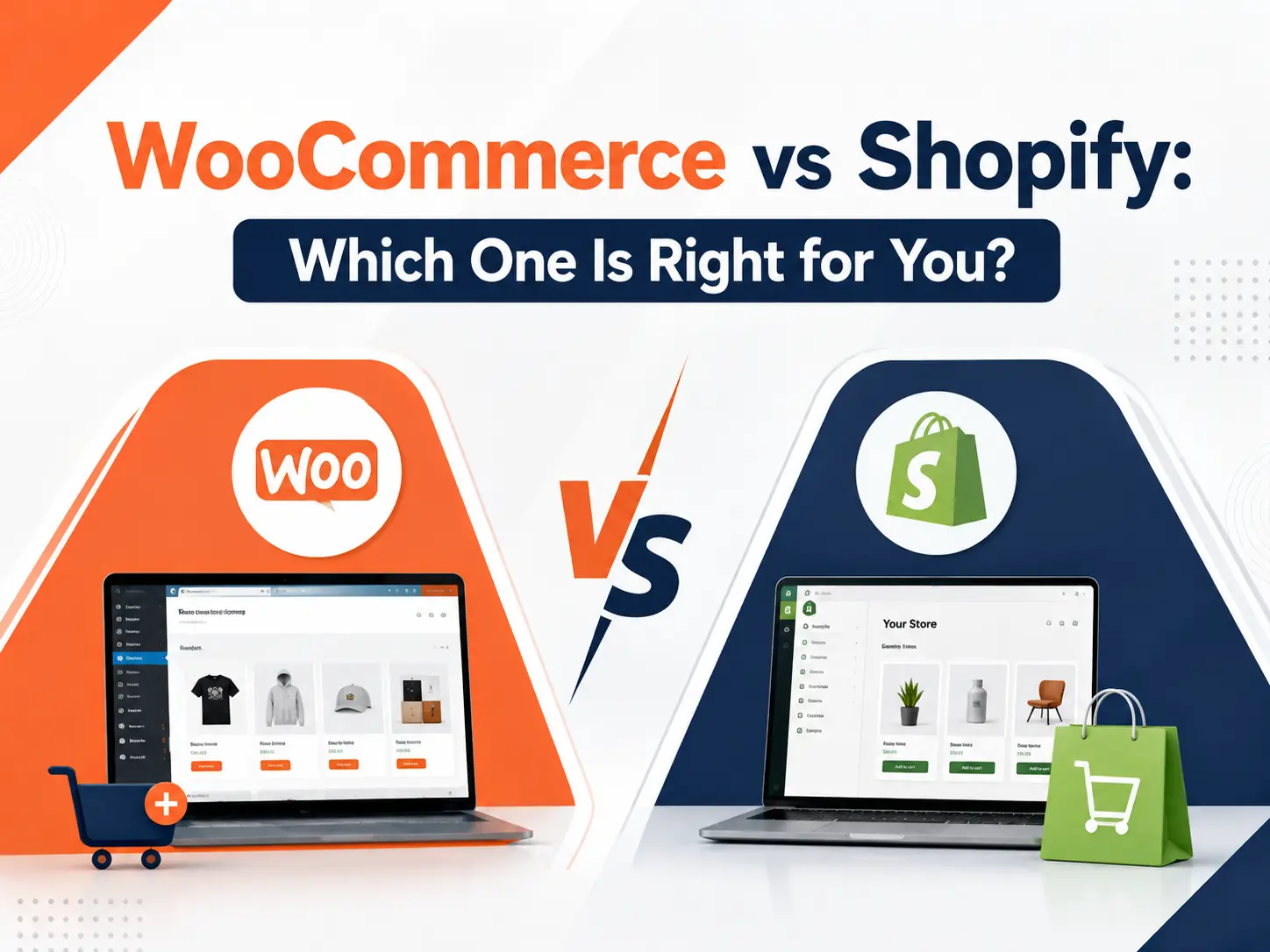
This makes WooCommerce vs Shopify an important comparison for businesses planning to establish or expand their online presence. Both platforms can support successful ecommerce businesses, but they are built around different approaches. Shopify is a hosted ecommerce platform designed to simplify store creation and management, while WooCommerce is an open-source solution that works with WordPress and provides greater control over website functionality and content.
The right choice depends on technical expertise, business requirements, budget, customization needs, marketing strategy, and expected growth. A platform that works well for a small product-based business may not necessarily be the best option for a company with complex integrations or an extensive content strategy. Digital OmniTech helps businesses evaluate their ecommerce requirements and create strategies focused on ecommerce SEO, search visibility, website performance, user experience, and sustainable growth.
Shopify vs WooCommerce: What Is the Main Difference?
The biggest difference between Shopify and WooCommerce is the amount of technical responsibility given to the business. Shopify is a hosted solution. Hosting, server infrastructure, and many technical maintenance requirements are handled by the platform. Businesses can create an online store, add products, configure payments, manage orders, and focus on marketing without managing a separate hosting environment.
WooCommerce operates within WordPress and provides a more flexible environment. Businesses can choose their hosting provider, customize the website’s code, install extensions, modify functionality, and control many aspects of the website architecture.
Shopify Ecommerce Platform: Simplicity and Faster Setup
The Shopify ecommerce platform is designed to make launching an online store relatively straightforward. Businesses can choose a theme, upload products, configure payment and shipping options, and start managing orders without extensive development knowledge. However, achieving strong organic visibility still requires a well-planned Shopify SEO strategy covering keyword research, technical optimization, product pages, category pages, and content structure.
One of Shopify’s biggest advantages is its managed infrastructure. Businesses do not have to independently manage servers or deal with many hosting-related technical issues. This can be particularly useful for small businesses and entrepreneurs who want to focus on product development, customer acquisition, and sales rather than technical administration.
Shopify also provides a centralized environment for managing products, orders, customers, and store operations. This streamlined approach can reduce the technical workload associated with running an ecommerce website, while professional shopify seo services can help improve search visibility and attract relevant organic traffic.
WooCommerce Ecommerce: Control and Customization
WooCommerce takes a different approach by providing an open-source ecommerce environment within WordPress. This gives businesses greater control over their website and its underlying functionality. With WooCommerce ecommerce, businesses can customize website layouts, modify functionality, integrate external systems, control content, and configure their website according to specific requirements.
This flexibility can be particularly valuable for businesses that want their ecommerce store to function as more than a simple product catalog. For example, a company may want to combine its store with detailed educational resources, product guides, industry articles, comparison pages, and other content.
Ecommerce SEO: Which Platform Performs Better?
SEO should be considered before selecting an ecommerce platform because migrating an established website later can involve URL changes, redirects, content migration, and technical risks. Both platforms can support strong ecommerce seo but WooCommerce generally provides more granular control over technical configurations. Businesses can customize URL structures, metadata, website architecture, content organization, internal links, structured data, and other optimization elements.
Shopify also supports essential SEO functionality and provides a managed environment that simplifies many technical processes. However, businesses work within Shopify’s platform structure, which can limit certain advanced customizations compared with a fully controlled WordPress environment. The platform itself does not guarantee rankings. Effective search engine optimization depends on content quality, technical performance, search intent, website architecture, internal linking, authority, and user experience.
Shopify SEO and Store Visibility
A Shopify website still requires an effective SEO strategy to compete for organic traffic. Basic platform functionality is only the foundation. Shopify seo services can focus on areas such as keyword research, product page optimization, category structure, technical improvements, metadata, internal linking, content development, and performance monitoring.
Product pages should be optimized around real customer searches and purchasing intent. Descriptions should clearly communicate product features and benefits instead of relying on repetitive or generic text. Category pages can also target broader commercial searches and help search engines understand the relationship between products. A properly structured Shopify website can create a clear path from search results to category pages, product pages, and conversion actions.
WooCommerce SEO and Content Flexibility
WooCommerce provides extensive opportunities for businesses that want to combine ecommerce with content marketing. A business can create product pages alongside buying guides, tutorials, comparisons, educational articles, and industry resources. These different content formats can target customers at various stages of the buying journey.
woocommerce can therefore involve more than optimizing product pages. It can include improving the entire website architecture, creating topic clusters, strengthening internal linking, optimizing category pages, and developing content around relevant search intent.
Ecommerce Website SEO and Technical Performance
Regardless of the chosen platform, Ecommerce Website SEO depends heavily on the technical health of the website. A store with thousands of products can develop complicated website structures. Poor navigation, duplicate pages, broken links, slow-loading resources, and inefficient internal linking can make it harder for users and search engines to navigate the site.
Technical SEO should therefore be part of ongoing ecommerce website optimization. Businesses can learn more about important technical practices in this technical seo guide for 2026. A mobile-friendly website is particularly important because many ecommerce users browse and purchase through smartphones. Pages should load quickly, product information should be easy to read, and navigation should remain simple on smaller screens.
Product Page Optimization and Category Pages
Product pages are among the most valuable assets of an ecommerce website because they directly support purchasing decisions. Effective product page optimization should focus on useful product information, clear descriptions, relevant search terms, high-quality media, pricing information, specifications, and an easy purchasing process.
Category pages also deserve attention. Category page optimization can help businesses target broader commercial searches while providing a logical structure for users and search engines. Internal linking between categories, products, and supporting content can strengthen website navigation and distribute relevance across important pages.
Website Customization and User Experience
Website customization is another major factor when comparing the two platforms. WooCommerce provides extensive freedom because businesses can modify the WordPress environment and create customized functionality. This can be valuable for stores with unusual product configurations, complex workflows, or specialized integrations.
Shopify provides customization through themes, applications, and development options. For many businesses, these capabilities are sufficient to create a professional ecommerce experience without extensive technical management. Regardless of platform, customization should have a purpose. Adding unnecessary features can make a website slower and more complicated. The priority should be usability, performance, accessibility, and conversion efficiency.
Shopify vs WooCommerce: Cost Considerations
Cost is often a deciding factor, but businesses should compare the total cost of ownership rather than simply comparing platform fees. Shopify generally operates through subscription plans. Additional costs may come from applications, premium themes, payment processing, and development.
WooCommerce itself does not follow the same subscription model, but businesses need to consider hosting, domain registration, premium extensions, security, development, and maintenance. A basic WooCommerce store may have relatively low platform costs, but extensive customization can increase development expenses. Shopify can provide more predictable management, while additional applications can increase monthly costs. The best choice depends on the business’s budget and technical resources.
Content Marketing and Ecommerce Growth
Content marketing can support long-term ecommerce growth by attracting users before they are ready to purchase. Customers may search for product comparisons, buying advice, tutorials, specifications, maintenance information, or solutions to specific problems. Useful content can capture these searches and introduce potential customers to relevant products. WooCommerce can be particularly attractive to content-focused businesses because of its connection with WordPress.
Shopify businesses can also create blogs, guides, landing pages, and other resources to support their marketing strategy. The key is to connect content with commercial intent naturally. An informational article should help users understand a problem and then provide an appropriate path toward relevant products or services.
Creating an Ecommerce SEO Strategy
A successful ecommerce SEO strategy should not depend entirely on the selected platform. It should cover technical health, keyword research, search intent, content, product pages, category pages, internal linking, performance, and conversion opportunities. Businesses should also track more than keyword rankings. Organic traffic, impressions, engagement, conversions, revenue, and landing-page performance provide a better understanding of whether SEO is contributing to business objectives.
Regular audits can identify technical issues before they become significant problems. Content should also be reviewed periodically to ensure that important pages remain useful and competitive. Digital OmniTech can support businesses in building an ecommerce SEO strategy that aligns technical optimization, content, and organic growth objectives.
Which Platform Is Right for Your Business?
Shopify is generally suitable for businesses that prioritize simplicity, faster setup, managed infrastructure, and easier day-to-day administration. It can be particularly useful for entrepreneurs and businesses without extensive technical resources. WooCommerce can be a better choice for businesses that require greater control, extensive customization, and a strong content-driven marketing approach.
Businesses should consider their current requirements as well as future plans. A platform should be capable of supporting the expected product catalog, integrations, traffic, content strategy, and customer experience. There is no universal winner in the WooCommerce vs Shopify comparison. The better platform is the one that fits the business’s technical capabilities, budget, marketing objectives, and growth model.
Conclusion
The decision between WooCommerce and Shopify should be based on more than platform popularity. Shopify provides convenience, managed infrastructure, and a simpler setup, while WooCommerce offers greater control, customization, and flexibility. For businesses that want more control over website architecture, content, technical optimization, and woocommerce seo, the platform can provide a strong foundation for improving search visibility and supporting long-term ecommerce growth.
The platform is only the foundation. Long-term success depends on how effectively the store is optimized, maintained, marketed, and improved according to customer behavior and search demand. Digital OmniTech helps businesses develop practical ecommerce strategies designed to improve search visibility, website performance, and sustainable online growth.
Frequently Asked Questions
1. Is WooCommerce better than Shopify for SEO?
WooCommerce provides extensive control over technical SEO, content structure, URLs, and website customization. Shopify can also achieve strong SEO performance when its technical settings, content, product pages, and website architecture are properly optimized.
2. What is the difference between Shopify SEO and WooCommerce SEO?
The main difference is the level of technical control. WooCommerce provides more flexibility for modifying the website environment, while Shopify offers a managed structure that simplifies many technical tasks.
3. Is Shopify suitable for a growing ecommerce business?
Yes. Shopify can support growing businesses that prefer managed infrastructure and straightforward store administration. The specific requirements of the catalog, integrations, traffic, and customization should still be considered.
4. Which platform is better for content marketing?
WooCommerce can be particularly useful for businesses with extensive content requirements because it operates within WordPress. Shopify can also support blogs, guides, landing pages, and other content formats.
5. Should a business choose WooCommerce or Shopify?
The decision depends on technical resources, customization requirements, budget, content strategy, and long-term goals. Shopify generally suits businesses seeking simplicity, while WooCommerce may be preferable for businesses that need greater control and flexibility.