+91 95752 60218

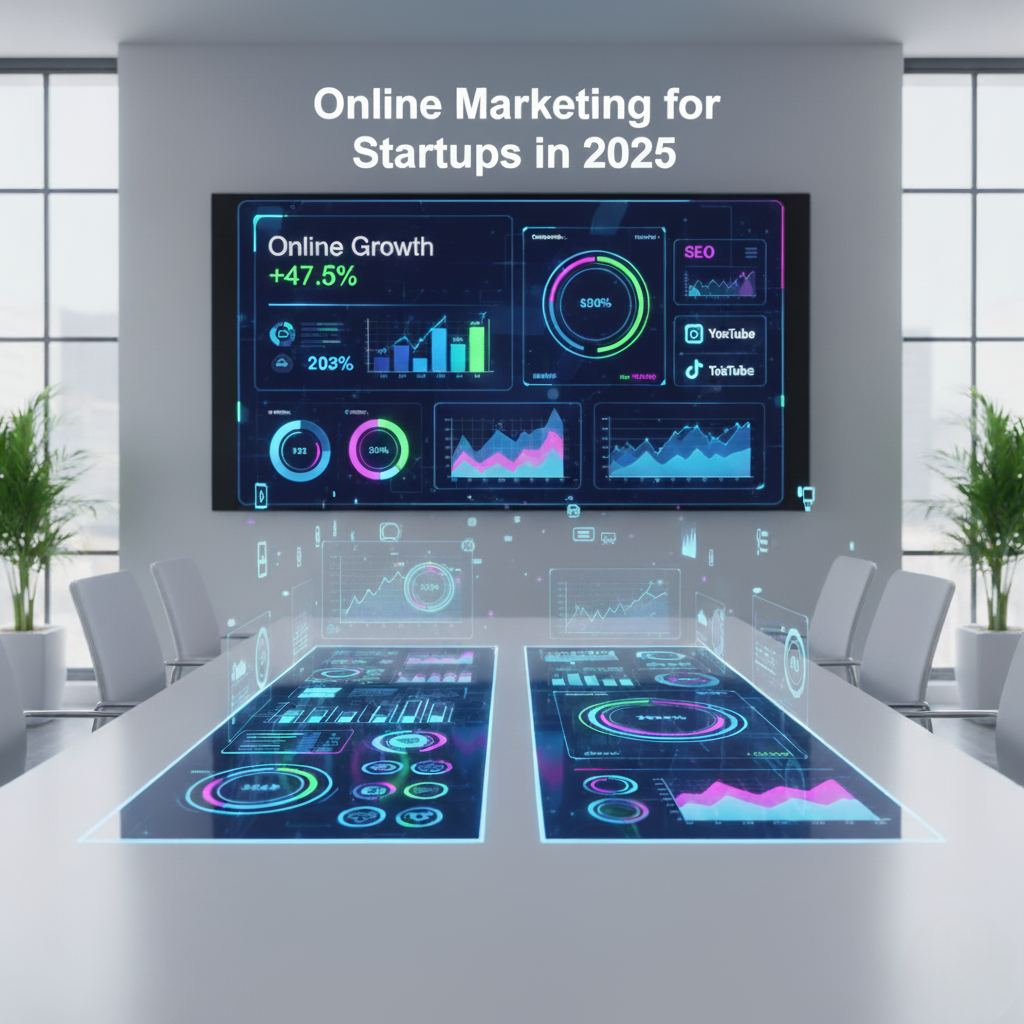
Launching a startup in 2025 is both exciting and challenging. While innovative ideas are everywhere, the real challenge lies in getting visibility, building trust, and driving consistent growth in an increasingly competitive digital space.
This is where online marketing becomes essential. It helps startups reach their ideal audience, create awareness, and generate leads – all while staying within a limited budget. Whether you’re building a tech product, an eCommerce store, or a local service brand, a strong online marketing foundation can determine your success.
In this detailed guide, we’ll explore the most effective online marketing strategies for startups in 2025, along with practical insights, recommended tools, and the latest digital trends to help you establish a strong and scalable presence online.
1. What is Online Marketing for Startups?
Online marketing, often referred to as digital marketing, involves using internet-based platforms and tools to promote your brand, products, or services. For startups, it’s not just about getting noticed — it’s about connecting with the right audience, telling your brand story effectively, and converting interest into long-term customers.
In 2025, online marketing is driven by data analytics, AI-powered personalization, and value-based content. Startups that leverage these elements early on can compete successfully with even the most established brands.
2. Why Online Marketing is Crucial for Startups in 2025
a. Cost-Effective Growth
Unlike traditional marketing methods such as print or TV ads, online marketing allows startups to achieve measurable results at a fraction of the cost. Platforms like Google, Meta (Facebook & Instagram), and LinkedIn allow precise targeting, ensuring your ad spend reaches the right people.
b. Real-Time Data & Insights
Online marketing provides access to real-time analytics. You can track user behavior, engagement, and conversions – enabling data-driven decision-making that helps improve ROI continuously.
c. Builds Brand Trust and Credibility
In today’s world, consumers research online before making a purchase. Having a professional website, consistent content, and positive reviews helps build trust in your startup from the start.
d. Scalability and Flexibility
Online campaigns can be scaled up or down quickly. Whether you’re launching in one city or expanding globally, your digital strategy can adapt effortlessly to your growth needs.
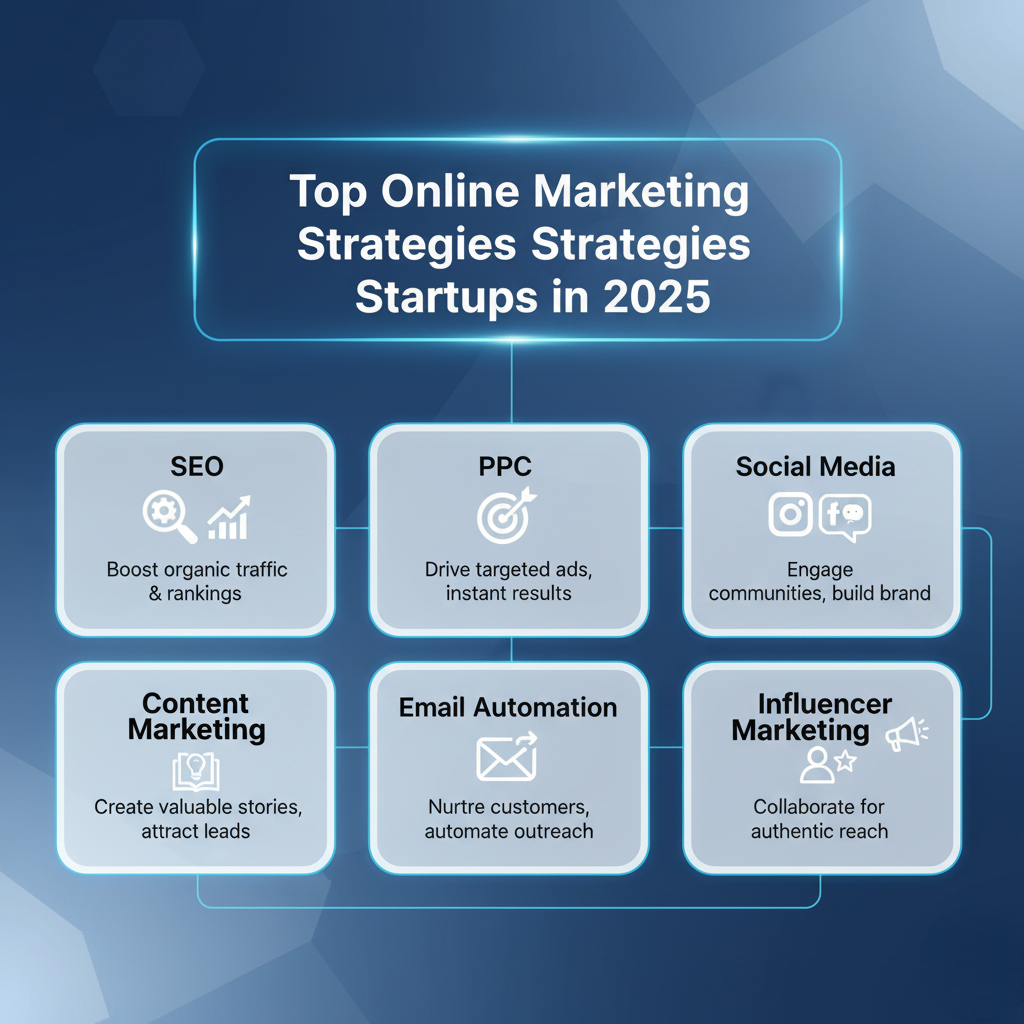
3. Key Online Marketing Channels for Startups
1. Search Engine Optimization (SEO)
SEO is the foundation of your digital presence. It ensures that when potential customers search for relevant keywords, your business appears prominently on search engines like Google.
Action Steps:
- Conduct keyword research focused on your target audience’s search intent.
- Optimize your website’s structure, speed, and mobile responsiveness.
- Create high-quality blog content that solves real user problems.
- Earn backlinks from reputable websites through guest posting and collaborations.
Example: If you’re a SaaS startup offering productivity tools, target keywords like “best task management app for startups” or “affordable project management software.”
2. Pay-Per-Click (PPC) Advertising
For startups looking for immediate visibility and traffic, PPC campaigns are invaluable. Platforms like Google Ads and Meta Ads let you reach specific audiences based on location, interest, and intent.
Best Practices:
- Start with a small, controlled budget.
- Test multiple ad variations and refine based on performance.
- Use compelling ad copy and strong calls-to-action (CTAs).
- Retarget visitors who interacted with your site but didn’t convert.
When executed strategically, PPC can generate quick, qualified leads that help validate your product-market fit early on.
3. Social Media Marketing
Social media is where your audience spends most of their time. For startups, it’s not just a communication tool – it’s a brand-building platform.
Effective Approaches in 2025:
- Focus on storytelling that highlights your brand’s purpose and journey.
- Use a mix of content types: short-form videos, infographics, carousels, and live sessions.
- Engage with your audience through comments, polls, and community groups.
- Choose platforms that align with your audience – LinkedIn for B2B startups, Instagram and YouTube for B2C brands.
Tip: Consistency matters more than frequency. A well-planned, authentic presence builds stronger trust than sporadic posting.
4. Content Marketing
In 2025, value-driven content is one of the strongest growth levers for startups.
Content marketing builds authority, drives organic traffic, and educates potential customers.
What to Include:
- In-depth blog posts and guides
- Case studies and customer stories
- Educational videos and podcasts
- Industry insights and whitepapers
The key is to create content that informs, inspires, and solves problems rather than just selling.
5. Email Marketing & Automation
Email marketing remains one of the most effective ways to nurture relationships and increase retention.
For startups:
- Collect emails through website forms, webinars, and lead magnets.
- Segment your list to deliver personalized messages.
- Automate workflows like welcome emails, follow-ups, and cart reminders.
- Use tools like Mailchimp, ConvertKit, or Klaviyo for automation and analytics.
Insight: Studies show that personalized emails can improve click-through rates by up to 40%.
6. Influencer & Partnership Marketing
Micro-influencers – creators with 10K–50K followers – are more effective for startups because they have niche audiences and higher engagement rates.
Best Practices:
- Collaborate with influencers aligned with your brand values.
- Offer product trials or affiliate partnerships instead of large payments.
- Track performance using unique discount codes or UTM links.
This approach builds credibility organically and helps you reach an audience that already trusts the influencer.
4. How to Build a Winning Online Marketing Strategy
- Define Clear Objectives – Identify what you want to achieve – awareness, lead generation, or sales.
- Understand Your Target Audience – Develop buyer personas with detailed insights into customer needs and behavior.
- Choose the Right Channels – Select platforms where your audience is most active and likely to convert.
- Create a Content Calendar – Plan and schedule your content for consistency across all platforms.
- Allocate Budget Smartly – Prioritize high-ROI channels and keep a reserve for testing new strategies.
- Monitor, Measure, and Optimize – Use analytics tools to assess performance and refine campaigns regularly.
5. Essential Tools for Startup Marketing in 2025
- Google Analytics 4 – For tracking website traffic and user behavior.
- SEMrush / Ahrefs – For keyword analysis and SEO optimization.
- Canva / Figma – For designing professional visuals and infographics.
- HubSpot / Zoho CRM – For managing leads and automating marketing workflows.
- Meta Business Suite / LinkedIn Ads Manager – For managing ad campaigns.
These tools make it easier to manage and scale marketing efforts efficiently with limited manpower.
6. Measuring Online Marketing Success
For startups, success should be measured in more than just traffic — it’s about meaningful engagement, conversions, and customer loyalty.
Track these key metrics:
- Organic Traffic Growth (SEO performance)
- Lead Conversion Rate (how many visitors become leads)
- Customer Acquisition Cost (CAC)
- Email Open & Click-Through Rates
- Return on Ad Spend (ROAS)
Analyzing these KPIs regularly ensures that every marketing effort contributes to your business goals.
7. Emerging Digital Trends for Startups in 2025
- AI-Powered Personalization: Tools like ChatGPT and Jasper are helping startups automate and personalize content efficiently.
- Short-Form Video Dominance: Platforms like YouTube Shorts and Instagram Reels are key to audience engagement.
- Voice Search Optimization: With smart speakers becoming common, voice-friendly SEO is gaining importance.
- Interactive & Immersive Content: Quizzes, polls, and AR experiences enhance engagement and user retention.
Staying ahead of these trends gives startups a competitive edge in reaching modern consumers effectively.
Conclusion
In 2025, online marketing is not a choice — it’s the lifeline for every startup. The right combination of SEO, social media, PPC, and content marketing can help your business reach the right audience, build a trustworthy brand image, and drive sustainable growth.
Start small, focus on delivering real value, and adapt continuously as you learn what works best for your audience. Consistency, authenticity, and data-driven decision-making are the keys to scaling your startup successfully in the digital era.