+91 95752 60218

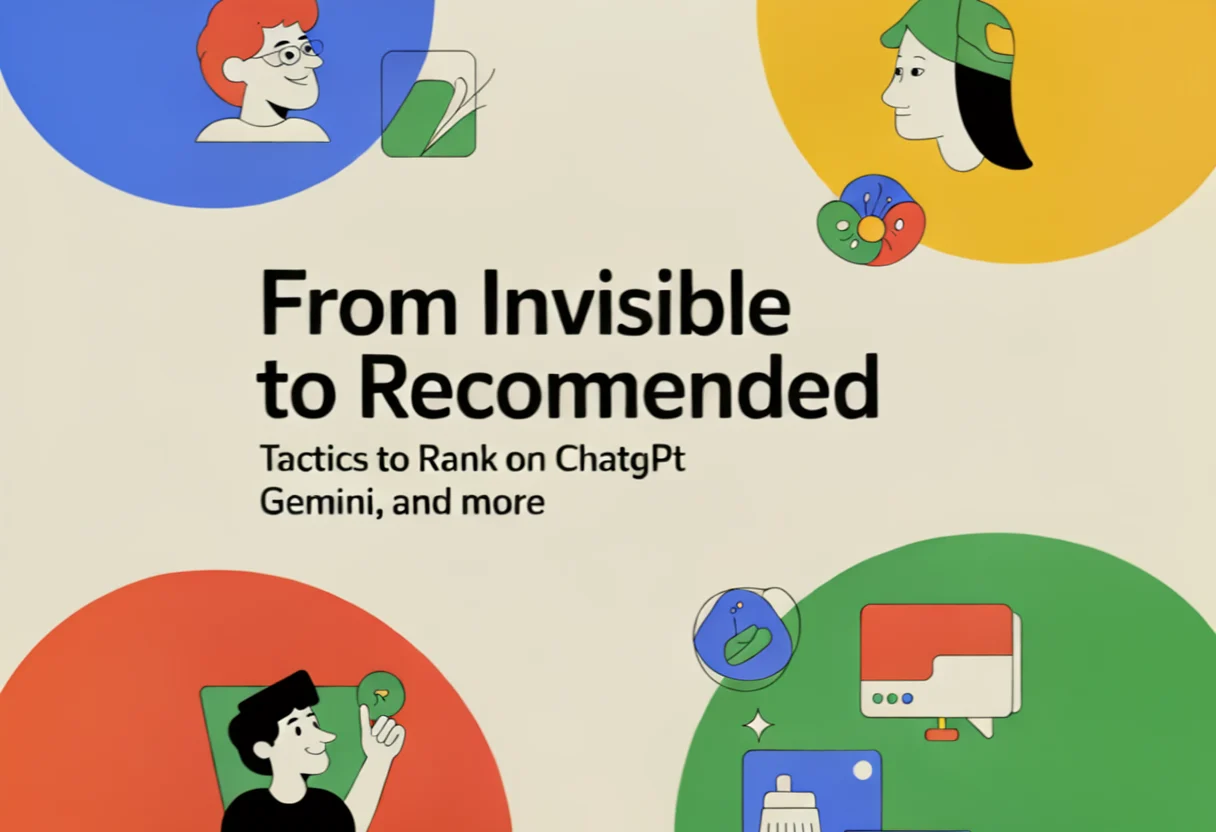
Think about how your own customers search today. A growing number of them are not typing into Google and scrolling through ten blue links. They are asking ChatGPT, Google Gemini, Perplexity, or Grok a direct question – and expecting a direct answer. “What is the best digital marketing agency in Indore?” “Which SEO service should I use for my small business?” “Who can help me run Amazon ads?” The AI replies in seconds, and in that reply, certain businesses get named. Others do not.
This shift is not coming – it is already here. AI-assisted search is growing rapidly and reshaping how people discover, evaluate, and contact businesses. Unlike a search engine that lists results for users to browse, an LLM (large language model) gives a single, curated recommendation. That means if your business is not among the brands it references, you are completely invisible to that searcher – no second page, no other chances.
This blog explains exactly what AI SEO is, how it differs from traditional SEO, and what practical steps you can take right now to make sure your business gets recommended. At Digital OmniTech, this is a conversation we are having with every client in 2026 – because the businesses that understand this shift early will hold an advantage that is very hard to close later.
What Is AI SEO? A Clear Definition
AI SEO – also called Generative Engine Optimisation (GEO) or Answer Engine Optimisation (AEO) – is the practice of building your brand’s presence across the web in a way that allows large language models to understand, trust, and confidently recommend you.
It is different from traditional SEO in a fundamental way. Traditional SEO is about getting your pages to rank on a search engine results page. AI SEO is about getting your brand woven into the fabric of what AI models know. These models are trained on billions of web pages, articles, reviews, directories, and forum discussions. When a user asks a question, the model draws on all of that accumulated knowledge to craft an answer – and it will reference the brands it has encountered most frequently, most positively, and from the most credible sources.
The clearest way to understand the difference: Google rewards pages. AI models reward brands. A single well-optimised page might rank on Google. But getting recommended by an AI requires that your brand has a consistent, authoritative presence across the entire web – not just your own website.
Why This Matters More Than Most Businesses Realise
The scale of the shift is easy to underestimate. Consider that ChatGPT now handles hundreds of millions of queries per week. Gemini is embedded directly in Google Search. Grok is integrated into X (formerly Twitter). Perplexity is growing rapidly as a research tool for professionals and students alike. Each of these platforms is actively recommending businesses, products, and services to their users – without sending them to a search results page first.
For most query types, an AI will name two or three businesses at most. There is no page two. There is no “also consider” list below the fold. Either your brand is in the answer or it is not. That is a fundamentally more competitive and less forgiving environment than traditional search – and it rewards the brands that have invested in real authority, not just page-level optimisation.
The good news is that most businesses have not started thinking about this yet. That means there is still a genuine first-mover opportunity for brands that act now.
How LLMs Decide Who to Recommend
To optimise for AI recommendations, you need to understand how these systems form their opinions about brands. LLMs are trained on enormous datasets drawn from across the internet – Wikipedia, news articles, industry publications, review platforms, directories, social media, forums, and websites. The model develops an implicit understanding of which brands are credible, relevant, and widely recognised in a given category.
When a user asks a question, the model draws on this training to produce an answer. For brand recommendations specifically, the following signals consistently influence whether a business gets cited:
• Frequency of mention: Brands that appear across many different, independent sources are seen as more established and trustworthy than those mentioned only on their own website.
• Source quality: A mention in a respected news outlet, trade journal, or industry publication carries far more weight than a mention on an obscure blog. AI models know the difference.
• Consistency: If your brand name, description, location, and services are inconsistent across your website, directories, and third-party listings, the AI struggles to confidently identify and recommend you.
• Review volume and quality: Reviews on Google, Trustpilot, Clutch, G2, and similar platforms are actively surfaced by AI tools when recommending local businesses and service providers.
• Structured data: Schema markup on your website gives AI crawlers machine-readable context about who you are, what you do, and where you operate – making it much easier for models to reference you accurately.
• Content depth: The AI learns from content that directly answers questions. Businesses with comprehensive, helpful content that addresses real user queries are more likely to be absorbed into training data and referenced in responses.
• Knowledge Graph presence: Entries in Google’s Knowledge Graph, Wikidata, or Wikipedia act as verified anchors that AI models can confidently draw on when generating recommendations.
Put simply: AI models trust brands that the broader internet already trusts. Your job is to make that trust visible, consistent, and easy for a machine to interpret.
7 Practical Strategies to Start Ranking on AI Platforms
These strategies are not theoretical. They are the specific actions that build the kind of brand authority AI models recognise and reference. None of them are overnight fixes – but each one compounds over time.
1. Build Your Knowledge Graph and Directory Presence
Google’s Knowledge Graph, Wikidata, and Wikipedia are foundational training sources for nearly every major AI model. If your brand has a verified, well-structured entry in these databases, AI systems have a reliable anchor point for your business – one they can reference with confidence. Start with your Google Business Profile: make it complete, accurate, and regularly updated. If your business qualifies for a Wikipedia entry, pursue it. Even a clean, detailed Wikidata record can meaningfully improve how AI tools identify and describe your brand. Beyond these, claim and complete your profiles on every major business directory relevant to your industry – Justdial, Sulekha, IndiaMART, LinkedIn, and sector-specific platforms.
2. Produce Answer-First Content Consistently
LLMs are trained on content that answers questions directly and thoroughly. The more your website and blog address the exact questions your target audience types into AI tools, the more likely your content is to surface in both AI training datasets and live retrieval. This is a significant departure from traditional keyword-focused writing. Instead of optimising for search volume, think about: What are the ten most important questions someone would ask before hiring a business like mine? Then write the most complete, useful answer to each of those questions that exists anywhere on the internet. FAQ pages, how-to guides, comparison articles, and explainer content all perform well in AI environments because they mirror the conversational, question-driven way people interact with AI tools.
3. Earn High-Quality Mentions Through Digital PR
One mention in a credible publication is worth dozens of mentions on low-authority sites. AI models assign significant weight to brands that are cited by established news outlets, industry journals, professional associations, and respected directories. Invest in digital PR as a deliberate strategy: pitch expert commentary to journalists, contribute guest articles to trade publications, participate in industry research reports, and seek features in relevant roundups and comparison pieces. This type of earned media is one of the most powerful ways to build the kind of cross-web authority that AI systems look for. It also directly supports off-page SEO – the external signals that tell both Google and AI models that your brand is credible and relevant. At DigitalOmniTech, off-page authority building is a core part of how we help clients achieve long-term digital visibility. Learn more about our full-service approach at digitalomnitech.com.
4. Implement Schema Markup Across Your Site
Schema markup is one of the most underused tools in digital marketing – and one of the highest-return investments for AI visibility. It is structured data that you add to your website’s code, telling machines exactly what your business is, what it offers, who leads it, and where it operates. Use schema.org vocabulary to mark up your business type (LocalBusiness, ProfessionalService, etc.), your services, your team’s credentials, customer reviews, FAQs, and any awards or certifications. This machine-readable context is directly valuable to AI crawlers, which use it to build an accurate picture of your brand. Without schema, the AI has to infer everything from unstructured text – which leads to less confident, less accurate recommendations.
5. Build a Genuine Review Ecosystem
Reviews are not just a trust signal for human visitors – they are a critical data point for AI recommendation systems. When a user asks ChatGPT or Gemini to recommend a business in their area, review data is one of the first signals these tools consult. Make it a standard practice to ask satisfied customers to leave reviews on Google, Trustpilot, Clutch, or any platform relevant to your industry. Respond to every review – positive and negative. The pattern of active, engaged review management signals to AI that your business is credible, responsive, and worth recommending. A business with 200 genuine reviews and active responses will consistently outperform a competitor with 20 reviews and no engagement, even if the competitor has a technically superior website.
6. Enforce Brand Consistency Everywhere
AI models piece together their understanding of your brand from many different sources simultaneously. If your business name is spelled differently on your website versus Google Business Profile versus Justdial, if your phone number is outdated in one directory, if your service descriptions vary significantly from page to page – the AI may fail to confidently associate these as the same entity. This lack of consistency is one of the most common and most fixable barriers to AI visibility. Conduct a full audit of every place your brand appears online and standardise your name, address, phone number, service descriptions, and brand messaging. This is called NAP consistency (Name, Address, Phone) in local SEO – and it matters just as much for AI search.
7. Distribute Content Across Multiple Channels
AI models are trained on text from across the entire web – not just websites. This means your visibility is shaped by your presence on LinkedIn, YouTube descriptions, podcast transcripts, guest posts, press releases, and community forums, not just your blog. A business that produces content only on its own website has a thinner digital footprint than one that distributes knowledge across multiple platforms. One highly effective and often overlooked channel is email marketing – not because AI reads your emails, but because a strong email programme drives repeat visits, engagement signals, and shares that expand your broader web presence. If you are not yet leveraging email as a consistent distribution channel, our email marketing services can help you build an audience that amplifies everything else you produce.

How to Track Your AI Visibility Right Now
There is no Google Search Console for AI mentions yet – but tracking your current position is simpler than most people think. Here is a practical four-step process you can start today:
1. Manual AI prompting: Open ChatGPT, Gemini, Grok, and Perplexity. Search for queries your ideal customers would use – “best digital marketing agency in Indore”, “top SEO company for small businesses in India”, “who does Amazon PPC management in India”. Note exactly which brands appear and how they are described. Do this monthly as a baseline tracker.
2. Competitor analysis: When a competitor appears in an AI answer, study their digital footprint. What publications mention them? How many reviews do they have? Is their schema markup more thorough than yours? This reverse-engineering tells you exactly what signals you need to strengthen.
3. Brand mention monitoring: Tools like Google Alerts (free), Brand24, or Semrush’s brand tracking feature can notify you whenever your business name is mentioned online. Higher mention volume across credible sources generally correlates with stronger AI visibility over time.
4. Content gap audit: Compare the questions your audience asks AI tools with the content on your website. If your site does not have a clear, thorough answer to a common question in your niche, that is a content gap – and closing it is one of the most direct ways to improve your AI visibility.
AI SEO vs Traditional SEO: What You Still Need and What Changes
It is worth being precise here, because a lot of misinformation is circulating about whether traditional SEO is “dead” or “irrelevant” in an AI world. It is neither. The technical foundations of good SEO – fast page speed, clean site structure, mobile optimisation, quality backlinks, and well-written content – all still matter. A technically broken site will hurt both your Google rankings and your AI visibility.
What changes is the question you ask. Traditional SEO asks: “Can Google crawl, index, and rank this specific page?” AI SEO asks: “Does the AI have enough reliable, consistent, authoritative information about my brand as a whole to confidently recommend it?” The second question is harder to answer with a checklist, but it rewards the same underlying discipline: building a brand that genuinely deserves its reputation.
For a broader view of how the digital marketing landscape is evolving in 2026, including how the top agencies in India are adapting their strategies, see our recent editorial: Top 10 Digital Marketing Agencies in Indore 2026. And if you are running an e-commerce brand and want to understand how AI visibility intersects with performance marketing, our Amazon PPC management services page covers how we approach visibility across both paid and organic channels.
Conclusion
AI search is not a future trend you can plan for later. It is the present reality for millions of consumers who are already asking ChatGPT, Gemini, and Grok to recommend the businesses they buy from. The brands that invest in building real AI visibility today will occupy a position of authority that latecomers will find very difficult to displace.
The path forward is not complicated, but it does require consistency: be present across the web, be credible in what you say about yourself, earn recognition from sources others already trust, and give AI systems the structured, clear information they need to recommend you with confidence.
If you are not sure where to start, the best first step is simply to open ChatGPT right now and search for your business category in your city. See what comes up. If your name is not there, you know exactly what to work on – and this guide has given you the roadmap to do it.
Want Help Getting Recommended by AI?
The team at DigitalOmniTech helps businesses across India build the brand authority, content presence, and technical foundation needed to show up in AI search results – and convert that visibility into real business growth.
Get in touch:digitalomnitech.com
Email marketing services: digitalomnitech.com/email/
Amazon PPC management: digitalomnitech.com/amazon-ppc-management/