+91 95752 60218

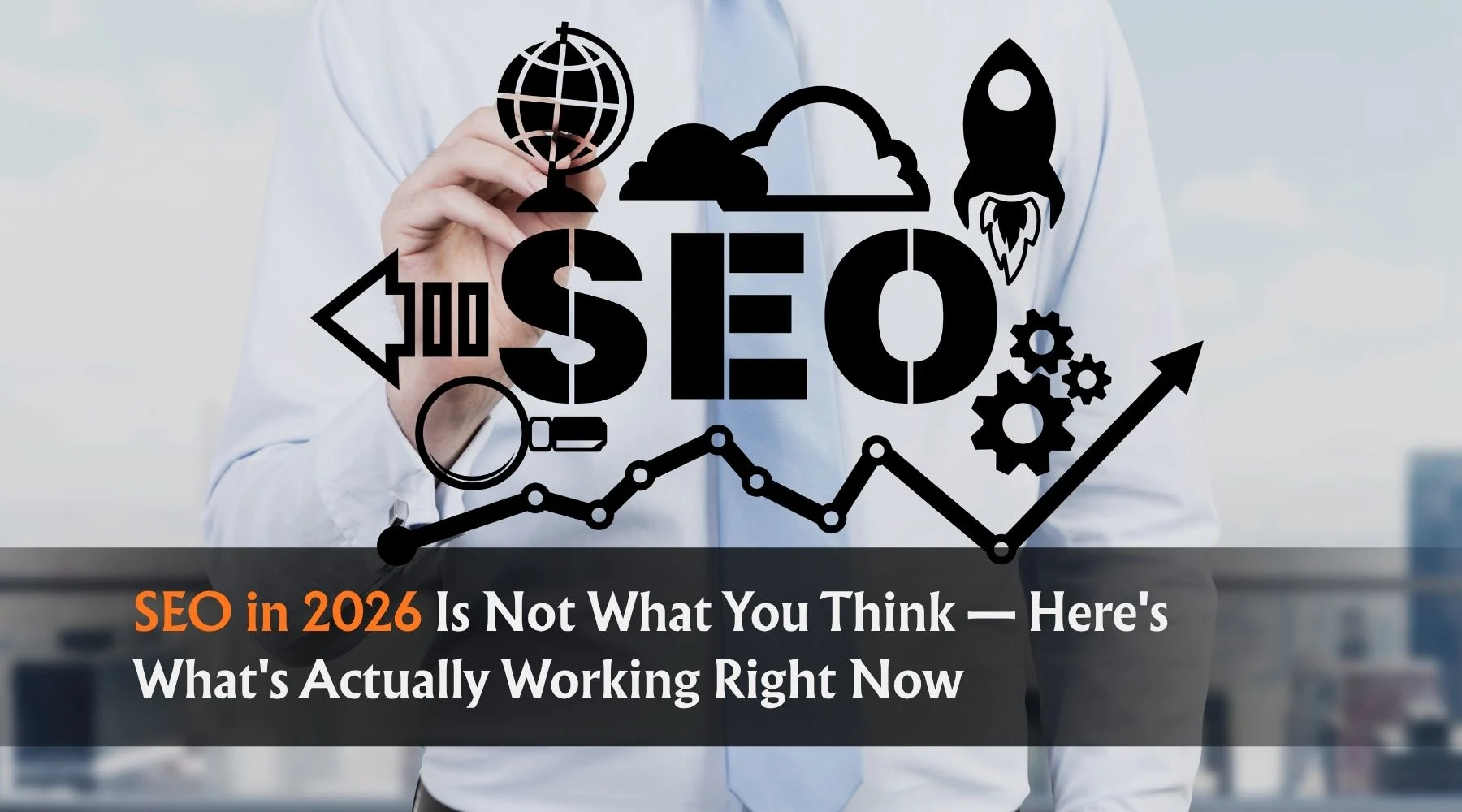
Table of Contents
- The Biggest Shift Nobody Prepared For — AI Overviews Changed Everything
- GEO — The Term You’re Going to Hear Everywhere in 2026
- EEAT Is Not a Buzzword Anymore — It’s the Filter
- The Death of Generic Content (And What Replaces It)
- Technical SEO Didn’t Die — It Just Got Less Forgiving
- Multi-Platform Presence — SEO Is No Longer Just Google
- Voice Search and Conversational Queries — Still Growing
- What to Actually Focus on in the Next 90 Days
- One Thing Worth Saying Before You Go
- The Underlying Truth Most SEO Guides Won’t Tell You
- FAQ
Let’s just say it plainly: if you’re still doing SEO the same way you were doing it two or three years ago, you’re losing ground. Not slowly. Fast.
The rules changed. The game changed. And honestly, a lot of businesses haven’t caught up yet — which, if you think about it, is actually an opportunity for the ones who have.
This blog is about what SEO actually looks like in 2026. Not theory. Not a listicle of vague tips. Real stuff — what’s trending, what died, and what you need to shift your energy toward if you want your content to rank, get traffic, and actually convert.
The Biggest Shift Nobody Prepared For — AI Overviews Changed Everything
If you’ve Googled anything in the last year or so, you’ve seen it. That big block of AI-generated text right at the top of the results page, answering the question before you even get to the actual websites below.
Google calls it AI Overviews. And it has fundamentally changed how traffic flows across the internet.
Here’s the uncomfortable truth: zero-click searches have been rising for years, but in 2025 and into 2026, the drop in organic clicks hit a new level. Some estimates suggest only around 40% of searches now result in someone actually clicking through to a website. The rest? The answer is handed to them on the results page and they move on.
So does that mean SEO is dead? No. But it means the goal of SEO has shifted. You’re no longer just trying to rank on page one. You’re trying to become the source that AI cites. The reference point. The authority that the AI Overview pulls from when it’s assembling its answer.
That’s a completely different objective. And it requires a completely different approach.
GEO — The Term You’re Going to Hear Everywhere in 2026
GEO stands for Generative Engine Optimization. It’s what happens when you stop optimizing only for Google’s traditional algorithm and start optimizing for AI-powered answer engines too — ChatGPT, Perplexity, Google’s AI Overviews, Microsoft Copilot, and whatever comes next.
The way GEO works, in simple terms: these AI systems pull information from across the web when assembling answers. The sites and content pieces they pull from most are the ones that are well-structured, clearly authoritative, consistently cited by other credible sources, and — this is key — provide information that the AI can’t easily find anywhere else.
That last point matters more than most people realize. Google’s own documentation has talked about “Information Gain” — content that adds genuinely new data, perspective, or insight to what’s already out there. An article that just rephrases what five other articles already said? The AI doesn’t need it. But original data, a unique angle, first-hand experience or a proprietary framework? That gets cited.
The businesses ranking in AI answers in 2026 are not necessarily the ones with the biggest domain authority. They’re the ones with content that gives the AI something genuinely useful to work with.
EEAT Is Not a Buzzword Anymore — It’s the Filter
Google introduced the concept of EEAT — Experience, Expertise, Authoritativeness, and Trustworthiness — a few years back and a lot of people treated it like a compliance checkbox. Add an author bio. Done.
That was wrong then. In 2026 it’s extremely wrong.
EEAT has become the actual filter through which content quality is being judged — by Google’s algorithm, by AI systems deciding what to cite, and honestly by readers themselves who’ve developed pretty good instincts for what’s authentic versus what was generated in bulk to fill a content quota.
What real EEAT looks like in practice:
Content written from actual experience — not “here are five tips about [topic]” but “here’s what happened when we tried this with a real client and what we learned.” That specificity is hard to fake and hard to replicate.
Authors with a genuine footprint — LinkedIn profiles, industry mentions, bylines on credible publications, real engagement on social platforms. A name attached to a face attached to a body of work.
Original data — even small surveys, internal analytics you can share, case studies from your own work. This is what builds citability.
Consistent brand presence across multiple channels — not just your blog, but podcasts, YouTube, industry forums, Reddit threads where you’re genuinely contributing. Everywhere your brand shows up and adds value, it adds to your overall authority signal.
The Death of Generic Content (And What Replaces It)
At some point between 2023 and now, the internet got absolutely flooded with AI-generated content. Not necessarily bad content in terms of grammar or structure — a lot of it is perfectly readable. But it’s generic. It covers the same ground as a hundred other pieces. It doesn’t add anything new.
Google noticed. The core updates throughout 2024 and 2025 penalized exactly this kind of content — pages that were optimized for keywords but hollow in terms of actual value. Traffic dropped significantly for sites that had been mass-producing content without genuine depth.
What replaces it? Specificity. Depth. Real human perspective.
Think about the queries that matter in your industry. Then think about the person typing that query — what do they actually need? What would genuinely help them move forward? Content that answers that, with real detail, from a real perspective, is what wins in 2026.
This isn’t a call to write less content. It’s a call to write better content. Fewer pieces, more substance, more original thinking per piece.
Technical SEO Didn’t Die — It Just Got Less Forgiving
Some people swung too far in the “content is everything” direction and let their technical foundations slip. That’s a mistake.
Core Web Vitals are still a ranking signal and they’ve gotten stricter in terms of what constitutes a good score. Page speed, especially on mobile, continues to matter. A slow site with great content will lose to a fast site with equally good content — every time.
Crawl budget matters more now too. Google’s bots have limited time on your site. If your site is bloated with low-value pages — thin product pages, paginated archives, duplicate content from parameter URLs — you’re wasting crawl budget that could be going to your best content.
Schema markup has become a genuine differentiator. Properly marked-up content is more easily parsed by both search engines and AI systems trying to understand what a page is about. FAQ schema, How-To schema, Article schema — these aren’t just for rich results anymore. They’re a clarity signal for AI-driven search.
Internal linking architecture is also worth more attention than it usually gets. A logical content structure where your strongest pages support and link to related content, and vice versa, helps search engines map your topical authority. It’s the difference between a site that covers a topic and a site that owns a topic.
Multi-Platform Presence — SEO Is No Longer Just Google
Here’s something that’s become increasingly clear: people don’t just search on Google anymore. YouTube is a search engine. Reddit ranks extraordinarily well for experience-based queries. Quora, LinkedIn articles, Substack — all of these surfaces show up in search results. And with AI search pulling from everywhere, your presence across these platforms directly influences how often you’re cited.
This doesn’t mean you need to be everywhere doing everything. It means you need to be strategically present in the places your audience actually goes.
For B2B — LinkedIn is non-negotiable. Your thought leadership content there builds the kind of brand signal that feeds back into your overall search authority.
For consumer-facing brands — YouTube, Instagram Reels, and even TikTok content increasingly shows up in search results. Video SEO is real and it’s growing.
For any brand talking to people who want peer validation — Reddit threads, Quora answers, forum presence. These rank. Being genuinely helpful in these spaces (not spammy, genuinely helpful) builds both referral traffic and brand authority.
Voice Search and Conversational Queries — Still Growing
The way people type search queries is changing. Shorter, more conversational, more question-based. “What’s the best project management tool for a team of five remote people with a limited budget” is now a totally normal search query — and AI systems handle that level of specificity much better than the old ten-blue-links model did.
For content creators, this means two things. First, your content should naturally include conversational language and direct answers to specific questions, not just keyword-stuffed headings. Second, FAQ sections within your content are genuinely valuable — not as filler, but as structured answers to real questions your audience is asking.
Targeting long-tail, conversational keywords is more valuable than ever. High-volume, single-word keywords are increasingly dominated by AI Overviews and major brand sites. The opportunity for most businesses is in the specific, nuanced, longer queries where the searcher knows exactly what they want and is genuinely looking for an answer.
What to Actually Focus on in the Next 90 Days
If you’re trying to figure out where to put your energy, here’s the honest version:
Audit your existing content. Not for keywords — for quality. Which pieces actually provide something valuable and specific? Which ones are generic and forgettable? Improve the good ones. Cut or consolidate the weak ones. Content pruning is real and it works.
Build topical authority in one or two areas rather than covering everything broadly. Depth beats breadth in 2026. A site that thoroughly covers one topic from every angle is more authoritative to both Google and AI systems than a site that lightly touches twenty topics.
Create content with genuine information gain. Original case studies, data from your own work, insights based on real experience. Even if it’s smaller-scale — your own data is unique, which makes it valuable.
Fix technical issues before adding more content. A slow site or a crawl issue will cap how much of your content even gets properly indexed, let alone ranked.
Get serious about your brand presence off your own site. Mentions, links, social proof, third-party reviews, podcast appearances — these are the signals that tell both Google and AI that you’re a real, credible entity worth citing.
One Thing Worth Saying Before You Go
The businesses that are winning at SEO in 2026 aren’t necessarily the ones with the biggest budgets or the fanciest tools. They’re the ones that understood the fundamental shift — from optimizing for clicks to building genuine authority — and adjusted their strategy accordingly.
At Digital OmniTech, this is what drives every SEO engagement we work on. Not chasing algorithm tricks. Not bulk content for the sake of keyword coverage. Real strategy, built on what actually moves the needle in the current landscape.
The Underlying Truth Most SEO Guides Won’t Tell You
Search engines — including AI-powered ones — are ultimately trying to do one thing: give users the most useful, trustworthy answer to their question. Everything else is mechanics. The businesses that internalize that and create content that is genuinely useful, genuinely trustworthy, and genuinely from a place of real expertise — those are the ones that rank, stay ranked, and convert the traffic they earn.
It takes longer to build. It’s harder to fake. And that, honestly, is the point. The harder it is to fake, the more valuable it is when you actually have it.
SEO in 2026 rewards real. That’s both the challenge and the opportunity — and if you build it right, the results compound in a way that no shortcut ever could.
FAQ
1. What is the biggest SEO change in 2026?
The biggest SEO change in 2026 is the shift from traditional keyword-focused optimization to user-intent and AI-driven search experiences. Search engines now prioritize high-quality, experience-based content that genuinely helps users rather than content created only to rank.
2. Is SEO still important for websites in 2026?
Yes, SEO is more important than ever in 2026. With increasing online competition, businesses need SEO to improve visibility, attract organic traffic, build authority, and generate long-term leads without relying completely on paid advertising.
3. Does AI-generated content help with SEO rankings?
AI-generated content can rank well if it is original, informative, and properly optimized. However, content should always be reviewed and improved by humans to ensure accuracy, readability, and value for users. Low-quality AI spam content may negatively affect rankings.
4. How long does it take to see SEO results?
SEO is a long-term process, and results usually take between 3 to 6 months depending on competition, content quality, website authority, and optimization efforts. Consistent publishing, technical improvements, and backlink building can accelerate growth over time.